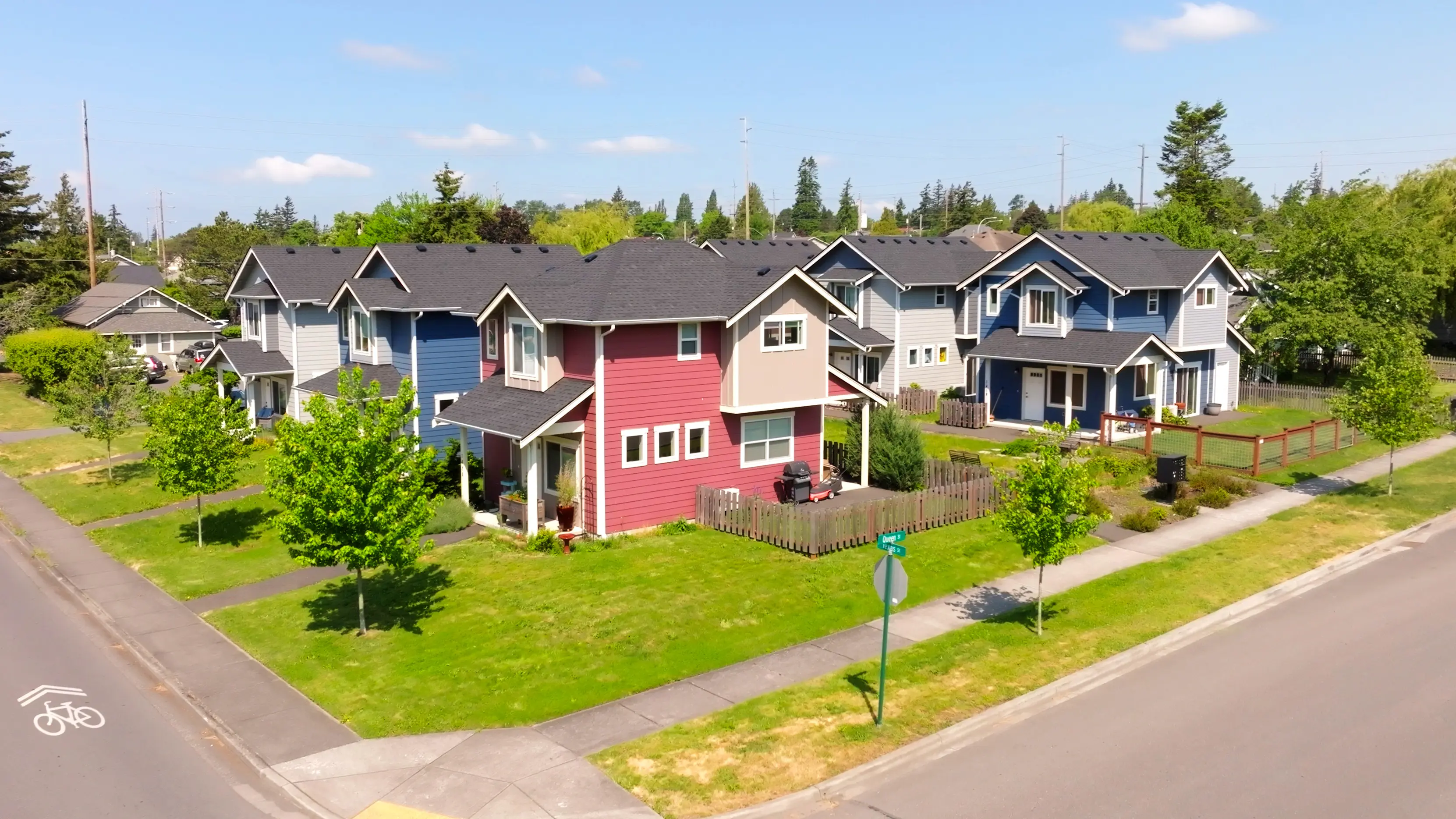
On May 19, Bellingham City Council approved two ordinances designed to improve housing opportunities in Bellingham. One expands the allowance of middle housing throughout Bellingham. The other improves the Multi-Family Tax Exemption program, which is designed to incentivize multi-family housing development and affordable housing production in the city.
Both ordinances were called for in Mayor Lund’s executive order on housing, which was signed in November 2024 with the express goal of expanding housing options in Bellingham. Together, they will help create an abundance of diverse housing choices at all income levels to match the community’s needs and wishes.
“Providing more housing choices will greatly improve the quality of life for people who currently live in Bellingham, and those who will make Bellingham their home in the future,” said Bellingham City Council President Hollie Huthman.
“Housing is an essential public good. We must reduce the scarcity of housing for Bellingham to keep thriving. With these changes, we’re following through on our promise to deliver better tools to generate more, and more affordable, housing,” Bellingham Mayor Kim Lund said.
Expanding Middle Housing: More Housing Options for Everyone
Mayor Lund’s housing executive order called on City staff and City Council to accelerate consideration of an interim ordinance that would expand Bellingham’s existing middle housing toolkit for citywide application with the goal of stimulating middle housing construction. Previously, middle housing was only allowed in certain neighborhoods and zones, constraining the ability to build more, and more affordable housing in parts of Bellingham.
Middle housing includes duplexes, triplexes, townhomes, and shared courtyard housing, among others. These housing types represent a wider range of housing styles, sizes, and price points and are generally considered to be more affordable than traditional single-family homes. They often require less land and can easily be woven into the fabric of existing neighborhoods. Importantly for a community with rising home prices, middle housing also offers a broader range of home ownership opportunities.
“We probably all know of someone who has been ‘priced out’ of Bellingham, or someone who has struggled to find a place to own or rent. One of the biggest reasons is that there just isn’t enough housing in this community,” said Planning and Community Development Director Blake Lyon. “Middle housing allows us to make more efficient use of our remaining buildable land while creating home ownership opportunities for people starting a career, starting a family, downsizing in retirement, or who just want something smaller, walkable and connected to their neighborhood.”
The existing middle housing toolkit, called the Infill Toolkit, was first adopted in 2009 to promote middle housing development. But it was restricted to specific neighborhoods. With Monday’s approval of the interim ordinance, middle housing will be allowed in all residentially zoned areas of the city, with the exception of property within the Lake Whatcom Reservoir.
The interim ordinance will go into effect on June 3, 2025. New state laws set to take effect in 2026 require that middle housing be allowed across Bellingham, so in addition to increasing housing opportunities, approval of the ordinance moves Bellingham toward compliance with those laws.
Multi-Family Tax Exemption Program Changes
On Monday, May 19, City Council also took the first steps toward approving changes to Bellingham’s Multi-Family Tax Exemption Program (MFTE Program), after a public hearing on the topic. The program, which was established in 1999, provides incentives in the form of 8-year and 12-year property tax exemptions to stimulate housing development and affordable housing production in designated urban villages in the city.
The 12-year exemption provides a longer incentive period to developers and, in exchange, developers must make 20 percent of rental units affordable to households earning 60 percent of the area median income. But the 12-year program has never been used. According to a recent program evaluation report, which considered market conditions, the 12-year program as it is currently structured is not a financially feasible option for developers of multi-family housing.
City Council is set to approve proposed changes that address this and other program challenges, including increasing the area median income threshold from 60 percent to 80 and expanding the program to more areas in the city.
“The updates we’re making reflect a data-driven, forward-thinking approach to expanding housing affordability across Bellingham,” said Tara Sundin, Community and Economic Development Manager. “We’re making the program more accessible to property owners while still delivering meaningful affordability for residents. Ultimately, we expect these changes will help expand our housing supply and access to affordable housing.”
“After hearing about the changes that are underway, multiple developers inquired about both the 8 and 12-year programs,” Lyon said. “The 12-year program has never been used and it’s encouraging that we’ve had multiple people express an interest so quickly. It’s a sign we are moving in the right direction.”
City Council will take a final vote on these changes at their Regular Meeting on June 9. You can learn more about the program at cob.org/mfte.
