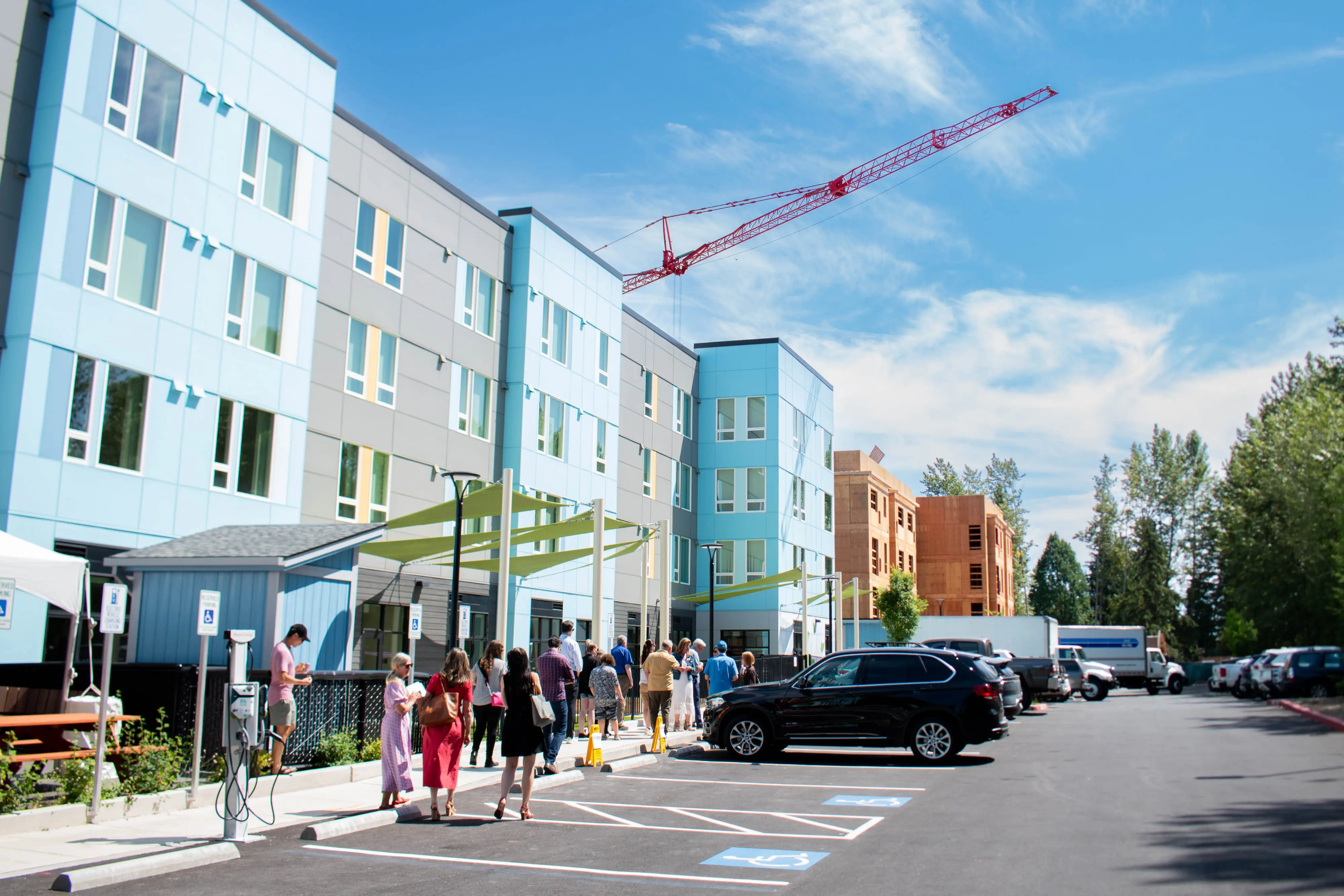
On September 14, 2026, Bellingham City Council gave final approval to adopt a new incentive designed to support the development of permanently affordable housing by reducing regulatory barriers and streamlining permit approvals for qualifying low-income housing projects.
“Our nonprofit affordable-housing developers face significant challenges getting these important projects off the ground,” said Tara Sundin, Community and Economic Development Manager. “Costs remain high, and the financing for these projects can be complicated.”
While many of the challenges affordable housing developers face are due to material costs and other market factors, City staff identified specific barriers to their development that could be addressed locally.
“This ordinance gives us flexibility when it comes to the rules that tend to be most challenging for low-income housing developers,” said Kurt Nabbefeld, Planning Development Services Manager. “It reduces barriers that are within the City’s control and it’s something we can do to support affordable housing development here.”
The new incentive maintains applicable health, safety, environmental, and infrastructure standards, while exempting qualified low-income housing development projects from most zoning and land use regulations such as height, density, required commercial, and parking. It applies citywide, but only in urban villages, commercial and residential multi-family zones. Approval of the incentive established a new chapter within Title 20 of the Bellingham Municipal Code (section 20.29A).
Eligibility requirements
Qualifying projects must be approved through the City’s standard affordable housing project selection process. They must provide long-term affordability for households earning less than 80 percent of Area Median Income. To ensure that the public benefits of the incentive are preserved over time, the property is required to be dedicated to low-income housing for at least 50 years.
“We acknowledge this incentive won’t solve all of our community’s affordable housing needs, but it’s another step we can take to make a difference,” Sundin said. “We’ll continue to look for ways to support affordable housing, including streamlining review processes, and providing local funding and loans through programs like the Bellingham Home Fund that help nonprofit housing projects get off the ground.”
More information, including the full ordinance, can be found in the Aug. 24, 2026, City Council Regular Meeting agenda.
