Protecting Lake Whatcom – Bellingham’s drinking water source – begins with protecting the land around it. The City’s long-standing Lake Whatcom Land Acquisition and Preservation Program purchases properties from willing sellers in the Lake Whatcom watershed to prevent future development and restore natural conditions.
Once acquired, our dedicated in-house crew stewards the more than 3,800 acres of City-owned protected land in the watershed year-round. Curious which properties we protect in the watershed? Explore our map of acquired properties!
Why This Work Matters
Healthy, resilient forests help:
- Protect water quality by filtering pollution from runoff before it reaches the lake
- Withstand drought, pests, wildfire, and extreme weather
- Store carbon, produce oxygen, and support cleaner air
Learn more below.
Our work follows City land use guidelines and the jointly developed Lake Whatcom Forest Management Plan. Prepared with Whatcom County and ecology-driven forestry consultants from Northwest Natural Resource Group, this plan provides a long-term, science-based strategy for managing more than 13,000 acres of watershed forest. The plan includes a detailed inventory of existing forest conditions and stand-specific recommendations.
It is expected to be adopted in 2026 and will guide forest management actions that prioritize water quality, forest health, and climate resilience.
City-owned watershed properties vary – some are forested, some previously logged, and some were previously used for logging. Our goal is to restore these lands to healthy forested conditions or protect their existing natural state to improve water quality in the lake. Forested land soaks up and naturally filters pollution from rainwater, slowing flows and reducing how much pollution reaches the lake.
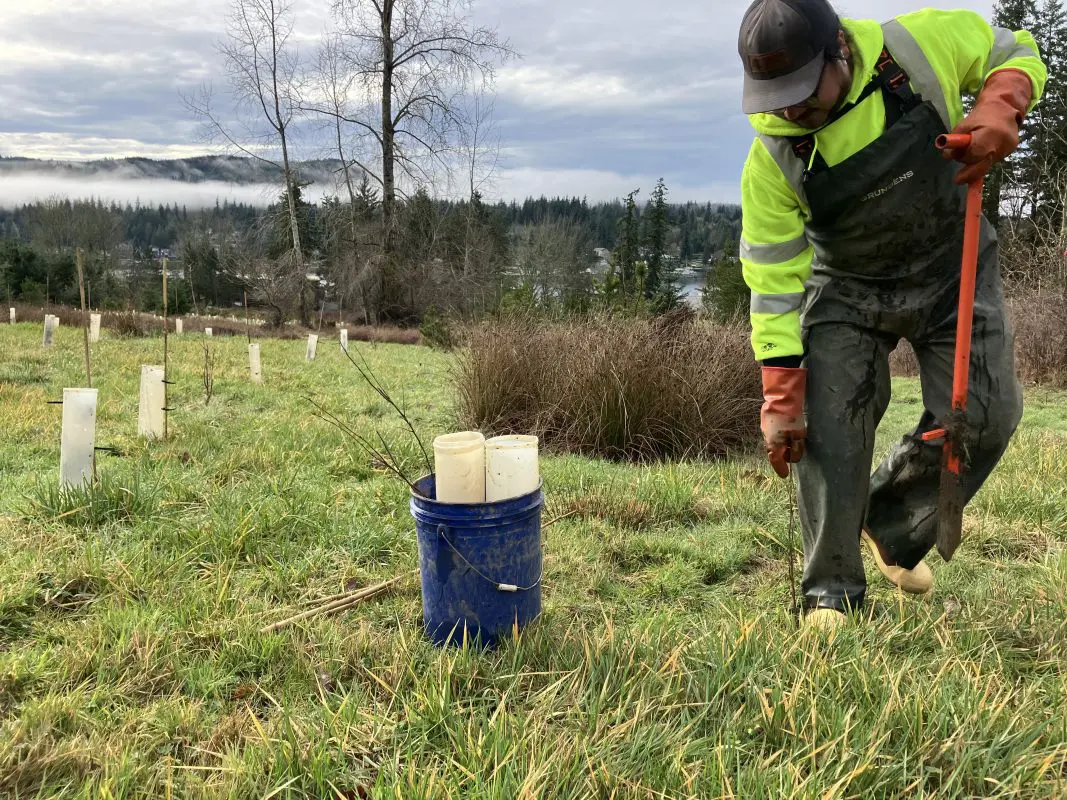
Our dedicated crew of six full-time staff use a range of strategies to reach our objectives:
Forest Health:
- We thin dense stands to improve tree growth and reduce wildfire risk.
- We remove invasive species that compete with native ones for resources.
- We plant a variety of native trees and shrubs to increase biodiversity, especially in previously logged or disturbed areas.
Water Quality:
- We remove old culverts to restore natural stream flow and fish passage.
- We stabilize slopes and close unauthorized trails to reduce sediment erosion into the lake.
Site Protection:
- We install signs, gates, and fencing to protect sensitive areas.
- We clean up trash and illegal dumping.
- We monitor and address encroachments.
Wildlife Habitat:
- We protect young plants with fencing.
- We retain snags and downed logs to create habitat complexity.
Wildfire Resilience:
- We thin overly dense forests and remove natural fuels around homes and structures.
Climate Resilience:
- We improve forest structure, increase plant diversity, reduce erosion, protect stream health, and maximize natural carbon storage to help forests adapt to changing conditions.
Beyond our work to improve forest health, we also partner with the Whatcom Conservation District’s Wildfire Risk Reduction Program to offer assessments for private properties adjacent to City-owned land. Resulting recommendations for the participating private property owner and the City guide fuel reduction work such as limbing trees, removing dead vegetation, and thinning overstocked stands, particularly along property boundaries. These are critical actions to protect forestlands and neighboring homes from wildfires.
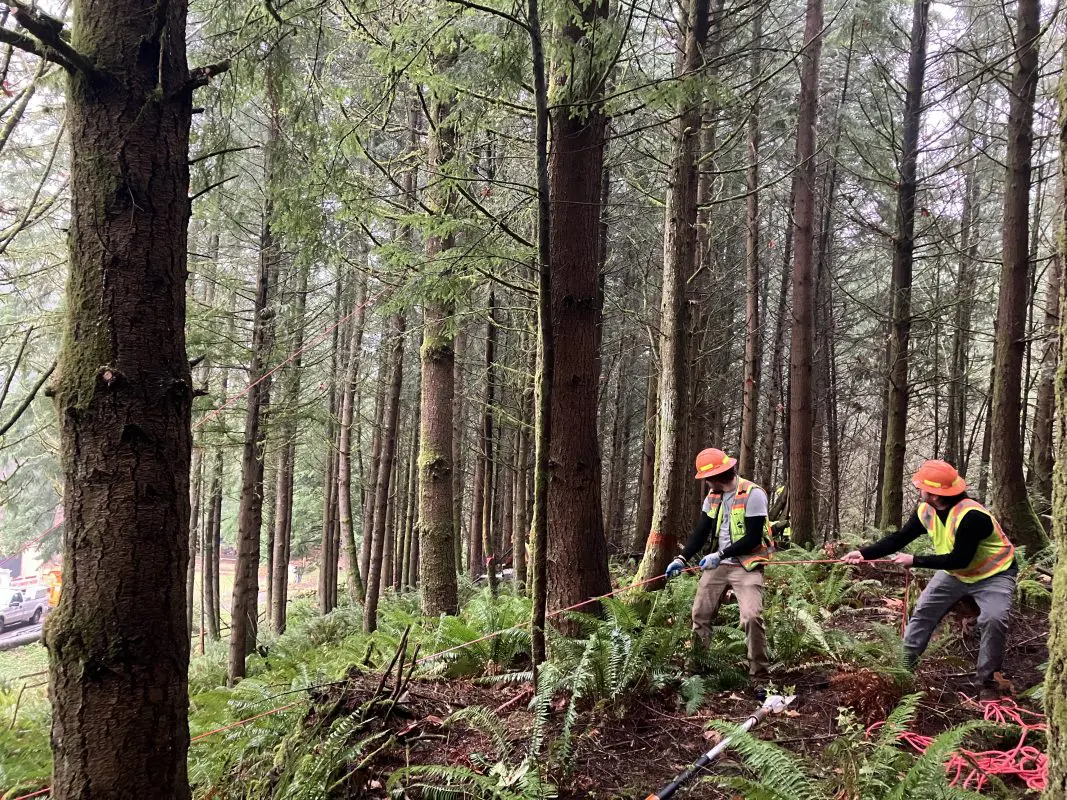
Some acquired properties were once used for commercial forestry, or logging. These types of forests have typically been planted very densely, causing the trees to grow tall and skinny and become unstable. These densely planted trees also block out sunlight and nutrients for other plants, resulting in limited understory vegetation and plant diversity. This makes the forest more susceptible to disease, wildfire, and pests.
Carefully thinning overcrowded forests helps protect water quality by reducing the risk of severe wildfires, which can lead to erosion and sedimentation that harms the lake. Thinning also encourages species diversity, provides a broader range of habitats for wildlife, and helps the remaining trees grow stronger and access more resources so they can be better equipped to withstand drought and strong winds.
We choose to thin trees only if doing so will significantly benefit water quality and forest health. When thinning live trees, we conduct an extensive review process, often partnering with a forestry consultant to ensure the best practices are followed. We prioritize removing younger, densely planted, or diseased trees to maintain the overall health of the forest. We never cut old-growth trees.
Tree thinning takes place only between June 1 and September 30 to reduce the potential for sediment runoff from soil disturbance. We monitor tree response post-harvest to ensure forest health. Any revenue from these activities is reinvested into the Lake Whatcom Watershed Fund to support continued restoration of protected properties.
North Beaver Creek Thinning Project – Summer 2026
In summer 2026, we are working with a contractor to complete a selective tree thinning project at our North Creek Beaver Preserve under the guidance of City staff and a forest health specialist. This 370-acre preserve was historically managed for commercial timber. Trees were planted very densely, causing them to grow tall, thin, and unstable. The dense canopy blocks sunlight and limits understory growth, reducing plant diversity and making the forest more vulnerable to disease, wildfire, and pests. To improve long-term forest health, the overcrowded trees will be carefully thinned, focusing on dying and unhealthy trees. The oldest and most robust trees will be left standing and no old-growth trees will be cut. View our mailer sent to adjacent property owners to learn more.
Properties purchased through our Lake Whatcom Land Acquisition and Preservation Program are primarily for drinking water protection. Recreation is limited to minimize impacts.
A 2025 resolution clarifies land management strategies and recreation guidelines for these lands. The resolution outlines how to recreate responsibly, recognizing that while some properties have authorized trails, other properties are not suitable for trail infrastructure or heavy recreational use.
Unauthorized trails damage vegetation and increase erosion. Our field crew removes these trails and restores these areas. We work with the Whatcom Mountain Bike Coalition (WMBC) to discourage unauthorized trail building and guide builders toward appropriate processes.
Motorized vehicles such as motorcycles, ATVs, and Jeeps are not permitted; violations may be addressed in coordination with the Sheriff’s Office.
The City manages only City-owned forestlands. On forested properties owned by others, we collaborate when possible to reduce impacts to water quality. We work closely with Whatcom County – owner of more than 9,000 acres of forested parklands – through the joint Forest Management Plan and the Lake Whatcom Management Program.
City staff also review logging proposals on private or state-owned property in the watershed. We have an appointee on the Washington State Department of Natural Resources’ Interjurisdictional Committee to make recommendations that will support water quality. City staff conduct site visits for commercial harvests on private and public land to help ensure protective riparian buffers, stable road designs, and careful management around waterways.
Land acquisition and forest management are part of a broader effort to protect Lake Whatcom. Working with our Lake Whatcom Management Program partners, the City also invests in stormwater improvements, Aquatic Invasive Species prevention, education, and more.
Learn More
- Watershed properties interactive map
- Lake Whatcom Management Program webpage
- Lake Whatcom Forest Management Plan updates
- Lake Whatcom Land Acquisition and Preservation Program
Contact
For questions or more information, please contact the Public Works Department at AskPW@cob.org or 360-778-7700.
