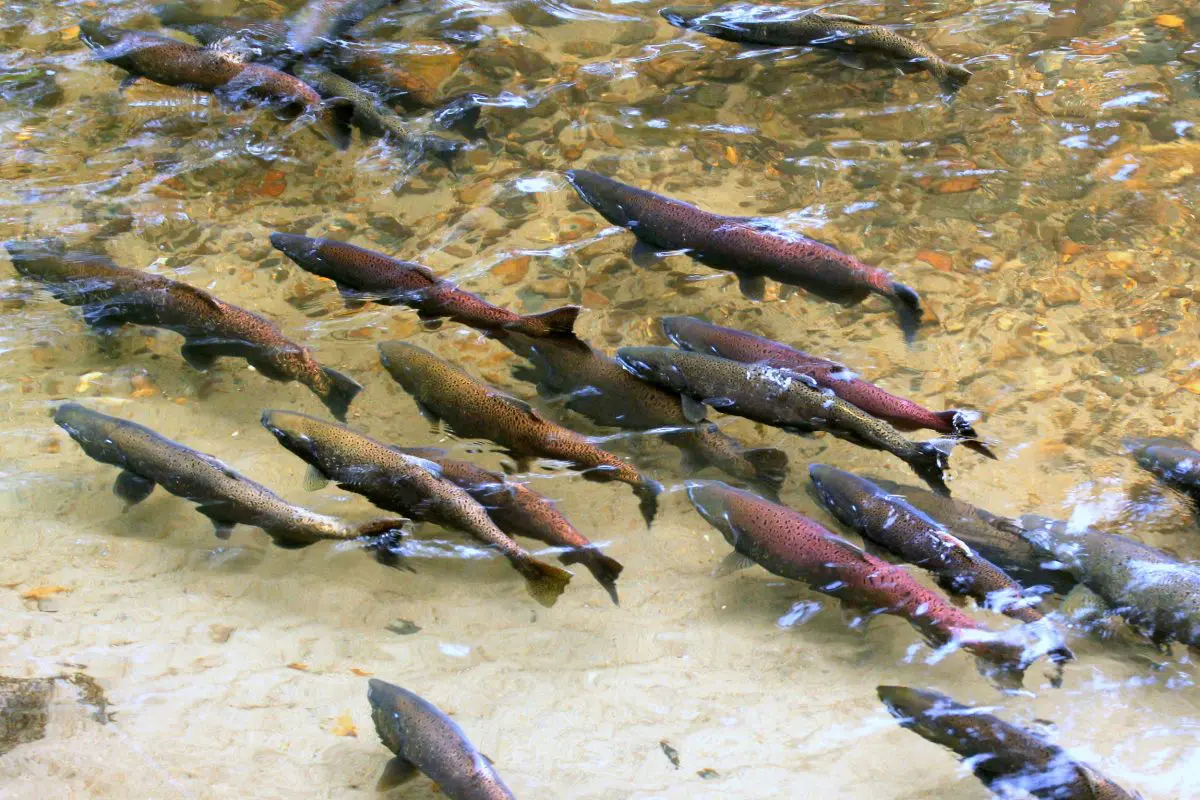
Have you seen Chinook salmon in Whatcom Creek around Maritime Heritage Park? If so, they were likely hatchery Chinook salmon raised and released into Whatcom Creek as part of an ongoing collaboration between Bellingham Technical College (BTC), Washington Department of Fish and Wildlife (WDFW), the Northwest Indian Fisheries Commission, Lummi Nation, and Nooksack Indian Tribe to support fisheries, fisheries education, and statewide efforts to increase food availability for endangered Southern Resident killer whales (orcas).
These hatchery Chinook migrate to the ocean and typically arrive in inner Bellingham Bay and the mouth of Whatcom Creek in late August or early September after the first rain raises the creek water level.
Supporting orcas and fisheries
During their migration, Chinook salmon in the ocean provide an important food source for endangered orcas, but many wild Chinook populations remain threatened. While these wild stocks recover, hatchery Chinook can help fill that role in the food chain, providing food for orcas near key foraging areas such as the San Juan Islands.
Hatchery Chinook are not intended to reproduce in Whatcom Creek when they return; instead, fish not caught by orcas contribute to tribal and non-tribal recreational and commercial fishing. Fish that die in the creek provide nutrients that support the surrounding ecosystem.
These fish are co-managed separately from wild fish by WDFW, Lummi Nation, and Nooksack Indian Tribe, in coordination with Bellingham Technical College. The fish originate from WDFW’s Samish River Hatchery.
Ethical and legal harvest
Although the City of Bellingham does not manage hatchery Chinook, the City is committed to honoring tribal sovereignty and treaty rights. The City supports these rights by respecting tribal regulations and methods during fishery openings.
Improving fish habitat
The City oversees a habitat restoration program focused on improving fish and wildlife habitat in our local waterways and forests. Several completed and upcoming projects aim to improve fish passage, making it easier for salmon to travel upstream in local creeks and access valuable habitat.
Reporting concerns
Illegal activity, including harassment of fishers, can be reported to the Bellingham Police Department via 911. Suspected poaching or unlawful fishing can be reported to WDFW Police by calling 877-933-9847 or emailing reportpoaching@dfw.wa.gov.
