Project Overview: EU180
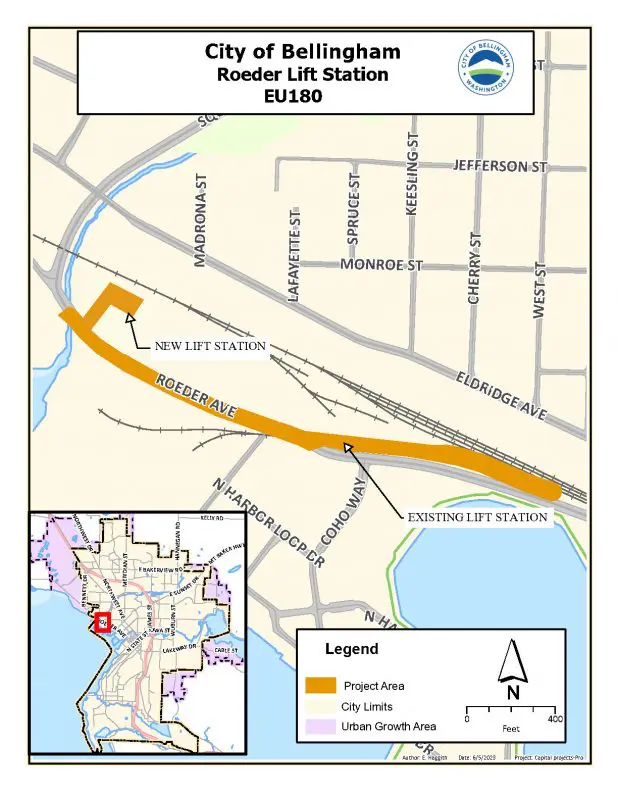
This project will improve a waste water transport system by upgrading the existing lift station and connecting pipes so that the system can handle more waste water in the future. The existing lift station receives waste water from most of the northwest portion of the city and is near its capacity limit. It currently requires frequent maintenance to remain in service. The new lift station will have a design capacity of 18 million gallons per day and will require less maintenance. This project is expected to be complete in late 2026.
What is a lift station?
Typically, waste water travels underground in sloped pipelines using gravity to allow it to flow naturally. However, in areas where the natural slope of the land doesn’t allow used water to flow freely, lift stations are used to pump the waste water from a lower elevation to a higher elevation. Pumping to a higher elevation allows the waste water to flow by gravity, through connected pipes, until it reaches its final destination of the sanitary sewer treatment plant.
Project Status – Summer 2026
Construction continues throughout the site. Travelers can expect daytime, single-lane closures along Roeder Avenue between Bellwether Way and Coho Way. Access to local businesses will be maintained, in coordination with flaggers. Bike lanes remain closed. Local businesses in the area remain open. We ask drivers, cyclists, and pedestrians to remain aware of shifting conditions in the roadway.
Funding
A $17.5 million contract for project construction was awarded to IMCO Construction by City Council (Agenda Bill 23707) in May 2023. This project is funded by the City’s Wastewater Fund.
Contact
General inquiries: askpw@cob.org
Media inquiries: pwmedia@cob.org
Project Engineer:
Aric Smathers, PE
(360) 778-7942
arsmathers@cob.org
