The City of Bellingham supports a variety of critical human service programs and housing projects. The City’s main role in these programs is as a funder. Using local, state, and federal funds, the City partners with government and non-profit agencies to address the spectrum of community needs through prevention, crisis response, and stability.
Learn more about the spectrum of support
Who we serve
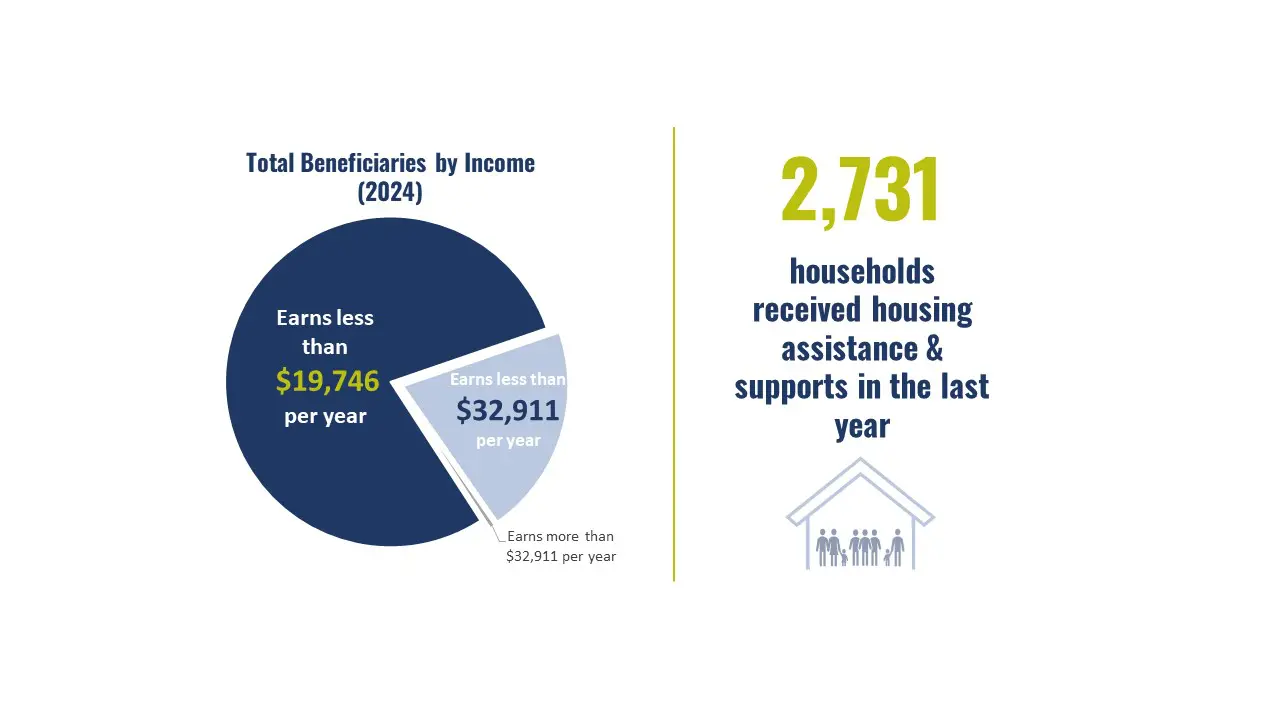
All the programs and services that receive City funding must primarily serve individuals and families who have low incomes. In 2025, that would mean a family of three earning under $78,050 per year. Most of the households that receive City support earn much less.
Hear one person’s story
Preventing homelessness
Offering financial assistance and other services to prevent individuals and families from becoming homeless.
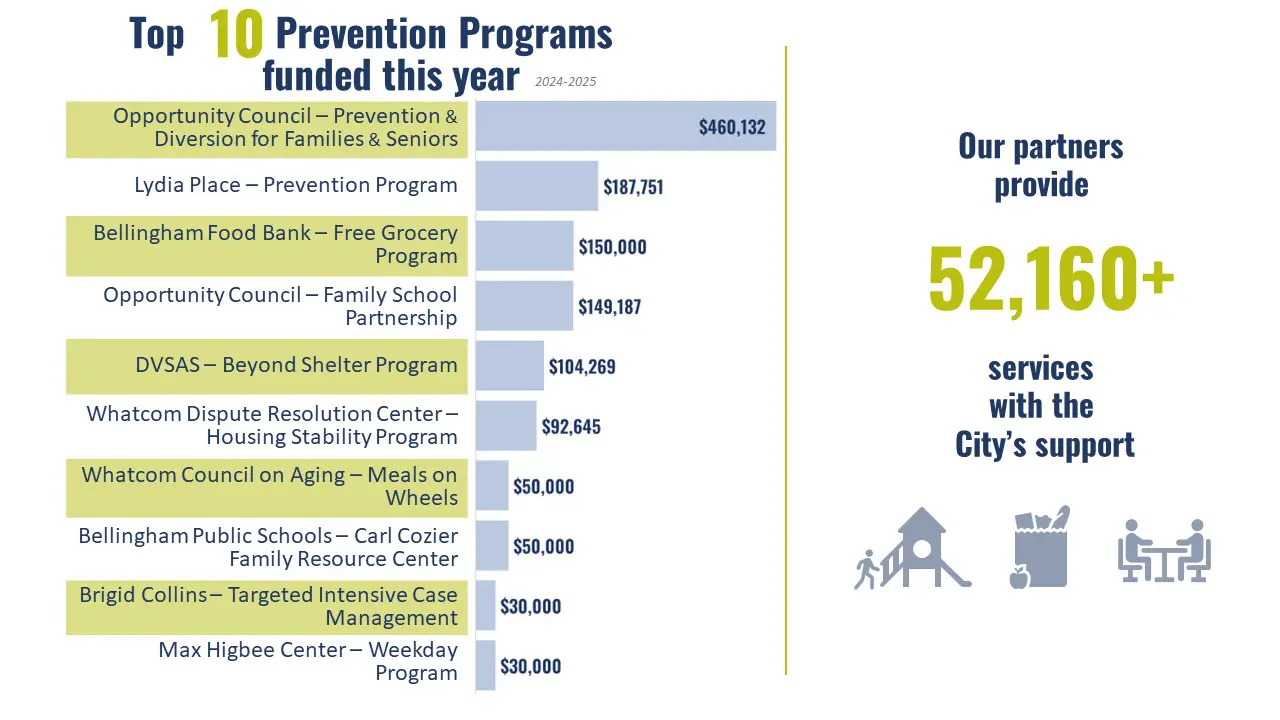
The City funds a wide variety of programs and targeted services to keep people from ever experiencing homelessness. These programs include services like mental health counseling, food assistance, childcare subsidies, job training programs, and limited housing assistance. Learn more about individual programs that have received City support.
Supporting those in housing crisis
Providing outreach, shelter and other basic needs to individuals and families if they do become homeless.
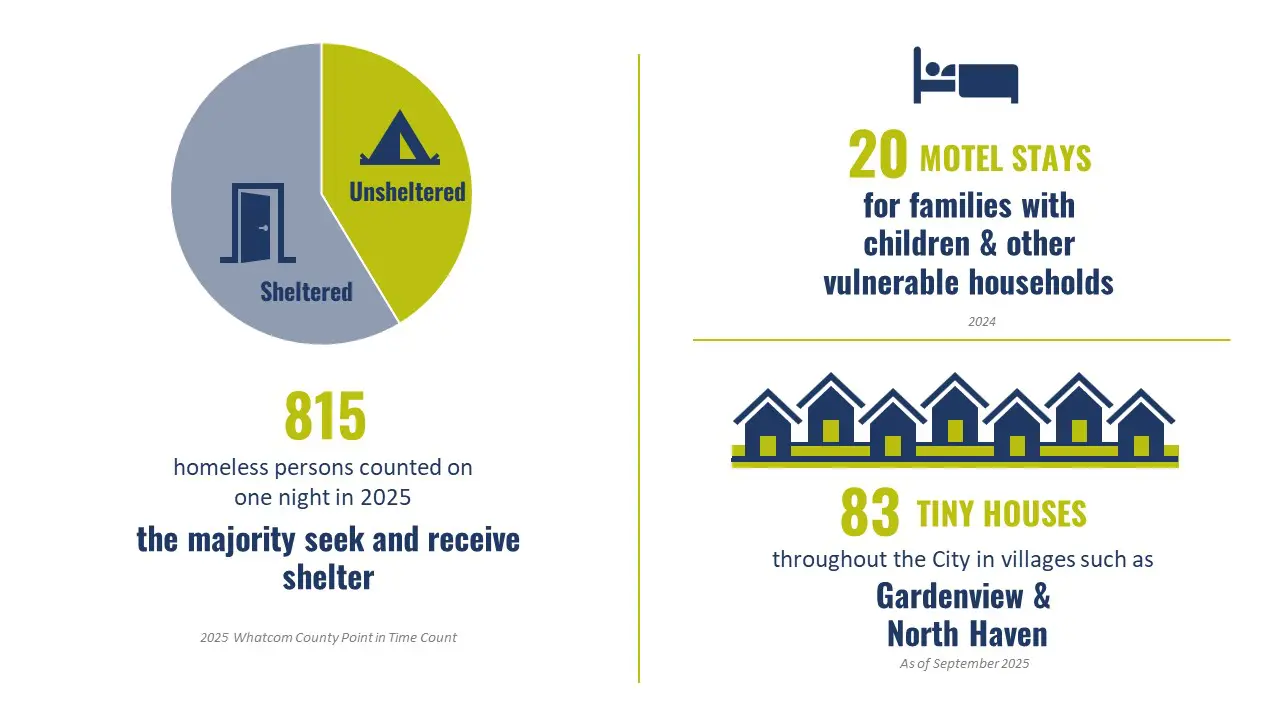
Those who are most visible in our community are often those in crisis. The City partners with agencies whose staff who are trained to help those who find themselves in these difficult circumstances. Programs include support for people fleeing domestic violence and shelter options for families, couples, and single adults who need a safe place to sleep. Find shelter and other services.
Creating housing stability
Securing long-term housing and necessary supports for those left out of the private market.
The majority of the City’s funding is directed toward creating long-term stability for residents who are disabled, elderly, or whose incomes do not make it possible to find housing on the private market. The City does this in three ways: through building affordable rental housing, preserving affordable housing where people already live, and supporting homeownership for low- and moderate-income residents.
Building affordable housing
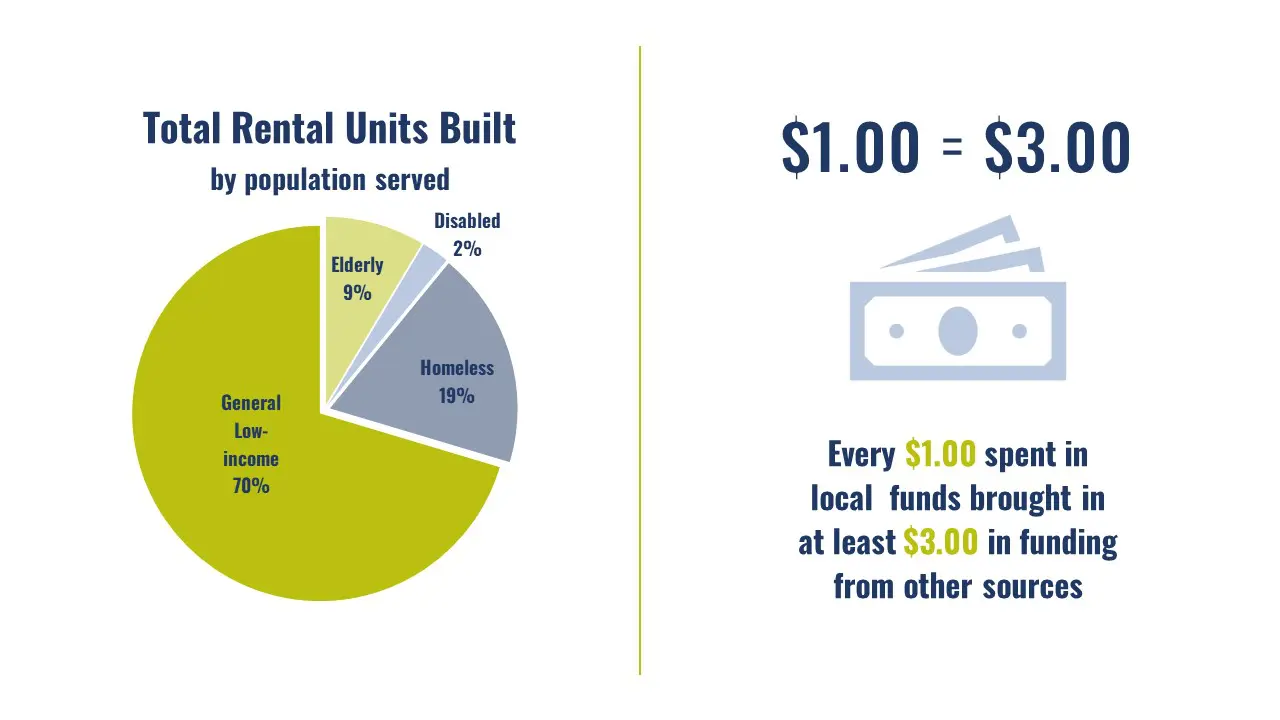
To help meet the need for housing that is affordable to low-income households, the City has partnered with non-profit developers to build or maintain housing for low-income residents. This includes both income-restricted rentals and transitional housing – which includes case management. Over 1,860 units have been built or maintained so far.
Learn more about the specific projects the City has helped to build in the Housing Projects Map section below.
Preserving affordable housing
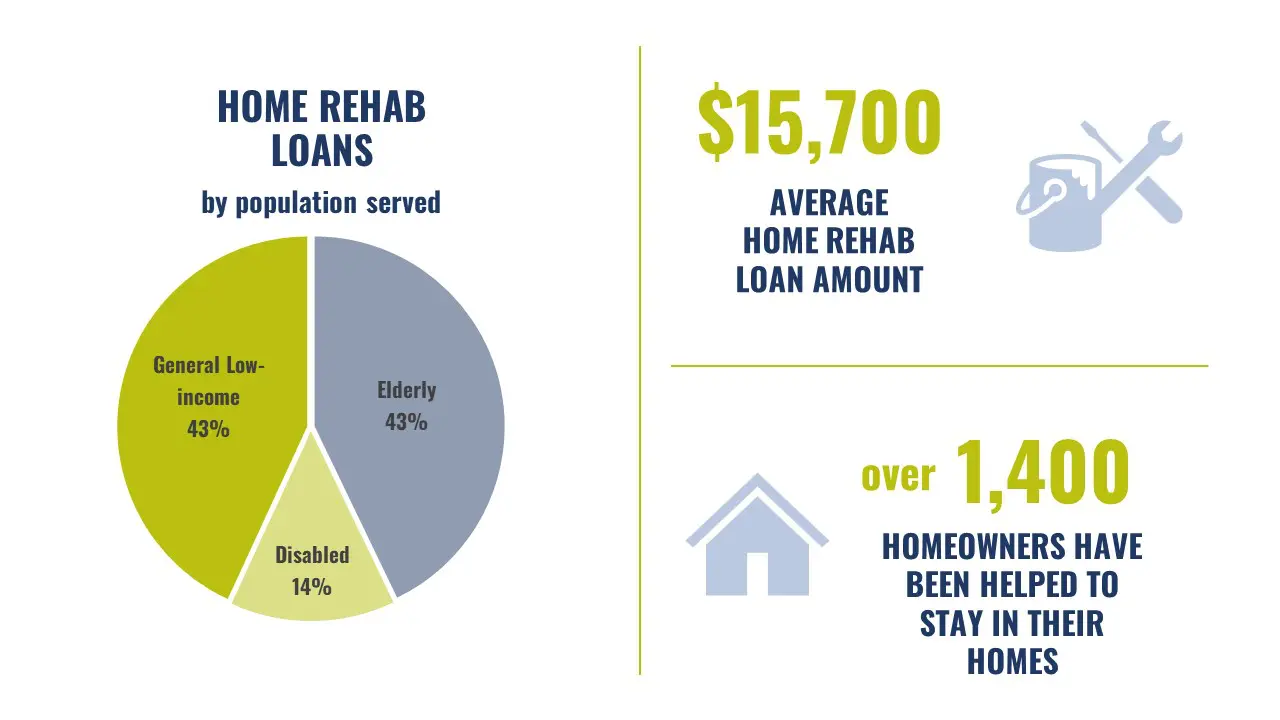
Sometimes low-income homeowners face housing instability if they can’t afford basic repairs on their home, such as fixing a roof or updating their plumbing. Since 1977, the City of Bellingham has helped homeowners stay in their homes by offering low-interest loans for essential repairs.
Learn more about the Home Rehabilitation Loan Program.
Supporting homeownership
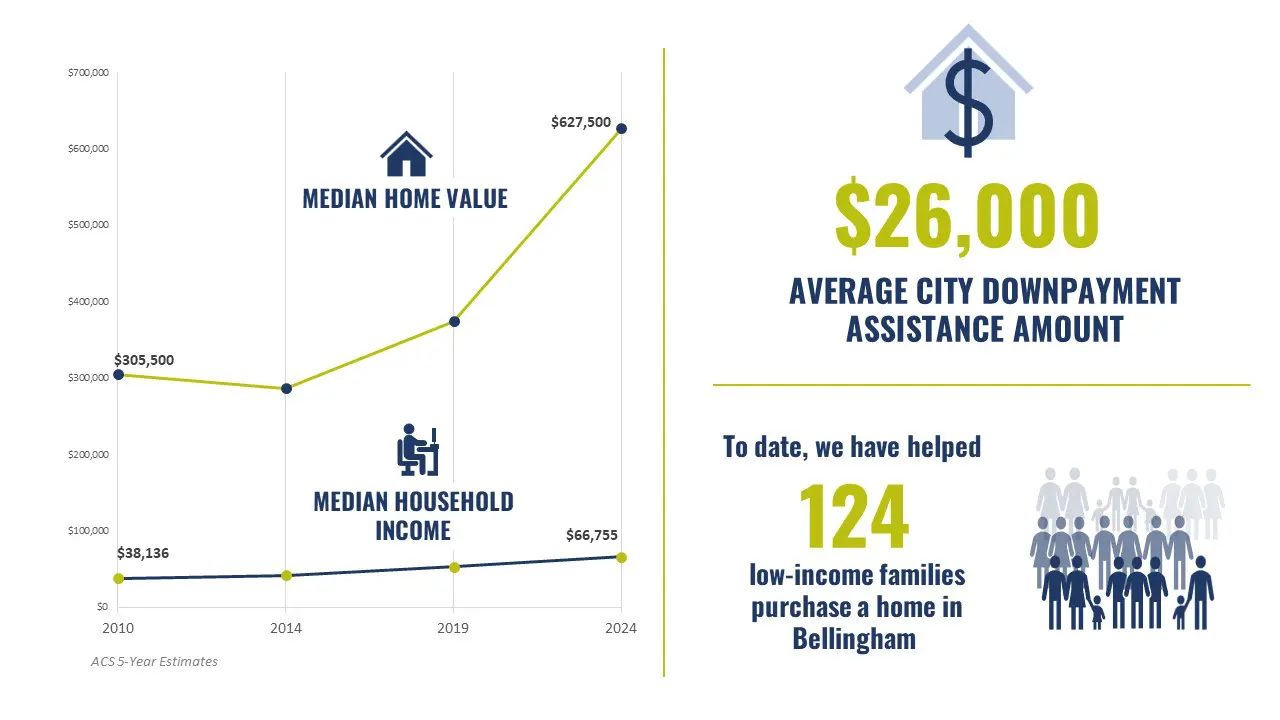
Incomes have not kept pace with the cost of housing in our community, making homeownership unaffordable for many families. We partner with Kulshan Community Land Trust and the WA State Housing Finance Commission to help with down payment and closing costs.
Housing projects
The City has contributed to expanding affordable housing in almost every neighborhood in Bellingham, and we are always working to add more. Explore the projects below. Recently funded projects are green. You can click on project locations to learn more.
Funding
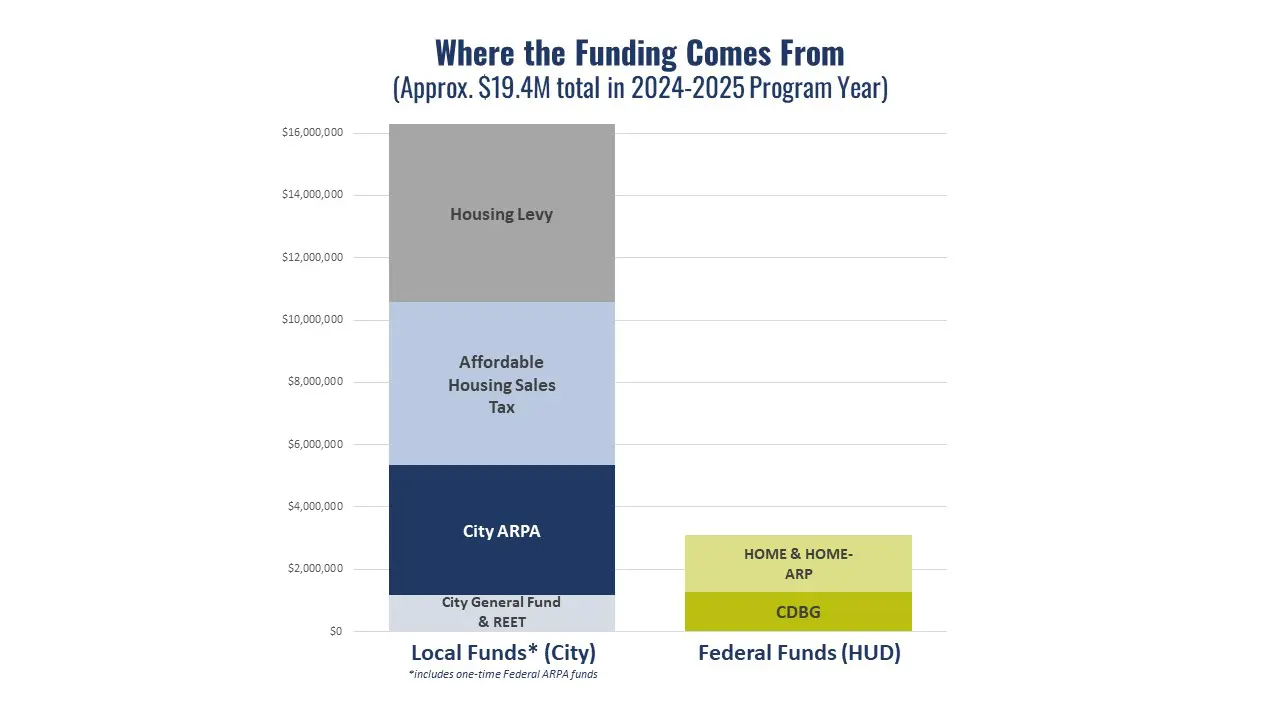
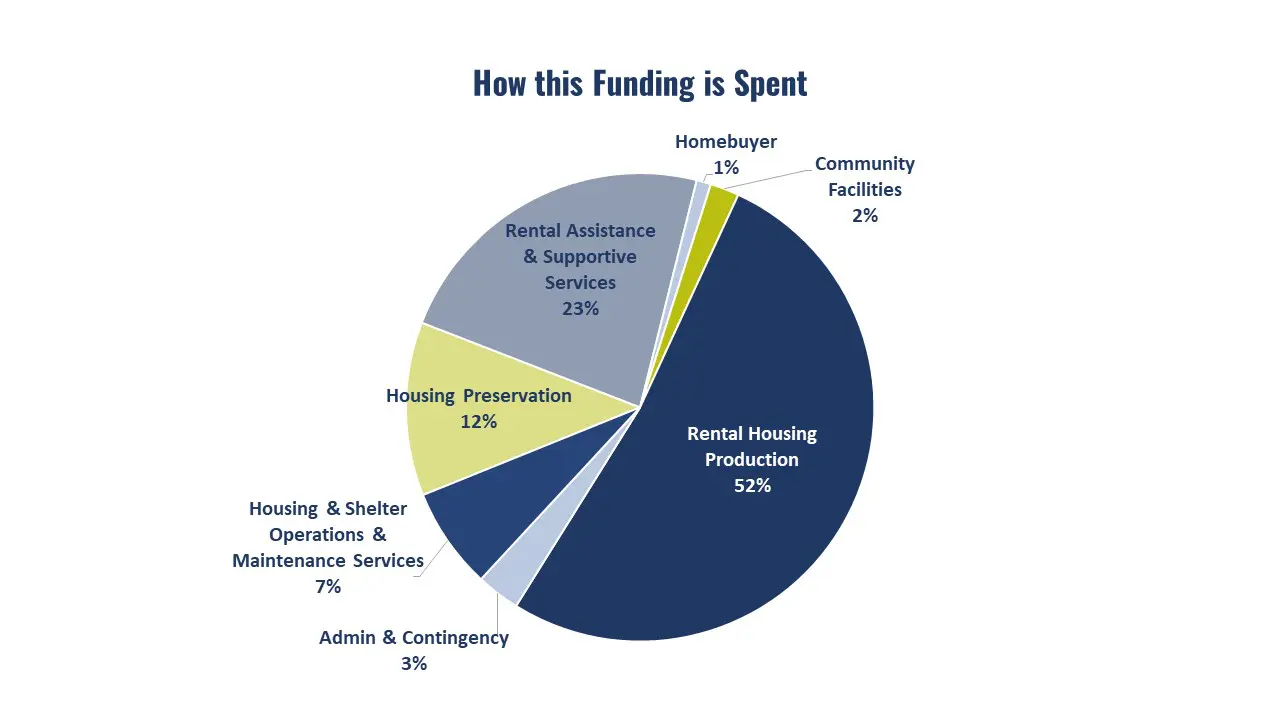
The City Housing & Human Services staff administer funding from a variety of sources. The images below depict the funding available and how it is spent in a typical year.
Our partners
Our government and non-profit partners in addressing Bellingham’s housing needs:
- Whatcom County
- Whatcom Homeless Service Center
- Lydia Place
- Mercy Housing
- Interfaith Coalition
- Pioneer Human Services
- Road2Home
- Low Income Housing Institute
- Catholic Community Services
- Kulshan CLT
- Domestic Violence & Sexual Assault Services
- Northwest Youth Services
- Opportunity Council
- YWCA
- Bellingham Whatcom County Housing Authorities
