In 2026, the City of Bellingham updated our approach to setting speed limits to align with the Safe Systems approach and reduce injuries. After reviewing options, we adopted NACTO’s City Limits framework. To make it work for Bellingham, we refined the criteria to align with broader City goals supporting climate action, offering more travel choices, and improving safety for everyone.
Our Speed Limit Policy guides decisions based on each street’s context, safety data, and functional role in the network. This data‑driven approach helps us see how drivers respond to changes, measure results, and refine the method as needed.
Key policy outcomes
City Council approved a new ordinance on May 18, 2026, that:
- Sets a 20 mph default speed limit on all city streets without posted signs.
This change affects non‑arterial residential streets where speed limits aren’t posted directly. - Establishes a 20 mph speed limit in the downtown business district.
Public Works will install new signs downtown and at city entrances in summer 2026. - Lowers speed limits by 5–10 mph on select arterial streets.
These changes take effect as signs are updated, beginning in 2027, with two phases across 2027–2028.
This work supports the City’s adopted transportation safety goals in the 2025 Bellingham Comprehensive Plan, including:
- Goal T‑A: Provide a transportation system that prioritizes safety, comfort, and reliability for all ages and abilities.
- Policy T‑1: Coordinate with the Washington State Department of Transportation (WSDOT) and other agencies to implement a comprehensive Safe System approach that strives to eliminate serious injuries and fatalities.
- Policy T‑2: Reduce vehicle speeds through traffic calming and enforcement, especially in school zones.
Why slower speeds are safer
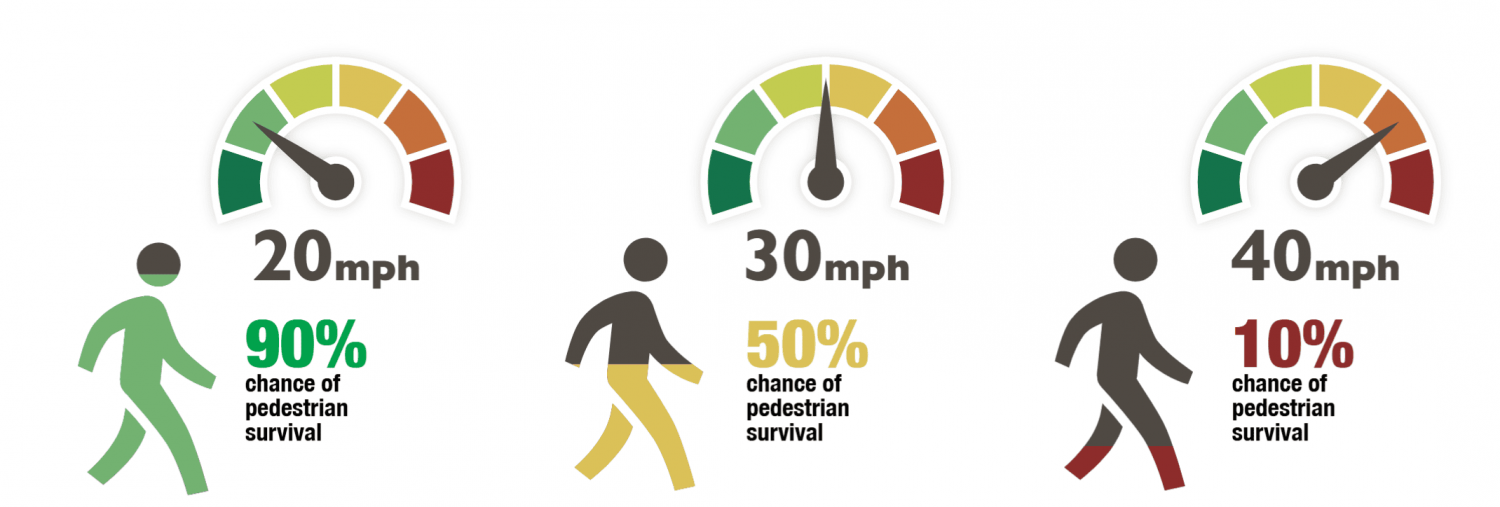
Slower speeds give drivers more time to react and significantly reduce the likelihood that a crash will result in a serious injury or death. Research consistently shows that even small reductions in speed can make a meaningful difference, especially for people walking or biking.
By slowing down in neighborhoods and other places where people walk, bike, and gather, we can help ensure everyone gets home safely.
Resources
- Citywide Speed Limit Changes Project page
- City of Bellingham Speed Limit Setting Policy
- Biking and walking in Bellingham
- Transportation Commission
- Community Streets Program
