Street Murals

Street art can be a powerful tool to slow traffic and improve safety in neighborhoods. By incorporating eye-catching murals or other artistic elements into streetscapes, we can naturally encourage drivers to slow down and pay more attention. This can significantly reduce the risks of accidents, especially for pedestrians and cyclists. Beyond safety, street art transforms ordinary streets into vibrant public spaces, encouraging people to walk, bike, and spend time outdoors. This increased foot traffic can foster a stronger sense of community and make neighborhoods more livable.

Aerial photo of the new Sunnyland Street Mural, art by Eliza Carver
The new Sunnyland Street Mural at North and Ellis, art by Eliza Carver

Requirements for Street Murals

Before you begin planning your mural, please review the following criteria.

To ensure your proposed location is suitable, it must meet the following criteria.

The location must be:

  • A residential road
  • A location that the neighborhood would like to be more pedestrian-friendly
  • If an intersection, it must be a 4-way intersection (or fewer) with no existing traffic calming infrastructure (no traffic circles, chicanes, etc.)

The location cannot be:

  • Near train tracks
  • In a school zone
  • In an industrial area
  • In front of a fire station
  • Within 1 block of an arterial street
  • On a street that needs significant repairs (e.g., lots of potholes or broken asphalt)

Street murals become a vital part of your neighborhood’s identity and aesthetic, so it’s important to collaborate with your neighbors on the design. The City’s Arts Commission and the Mayor need to review and approve the concept and the final art design prior to installation.

Designs that work well:

  • Exhibit lots of contrast with the road surface 
  • Use large, simple shapes as opposed to many small ones with lots of fine detail 
  • Engage the community to gather ideas and involve each other in the painting process
  • Can include natural elements such as plants, animals, and landscapes
  • May portray abstract and geometric patterns

Design restrictions:

  • Speech and text
  • Copyrighted material
  • Political or religious symbols
  • Depiction of activities or products that aren’t available to all ages
  • Painted games or sports courts
  • Designs that mimic traffic control devices (e.g., arrows, chevrons, crosswalks)
  • Colors used for traditional roadways (e.g., yellow used for striping, stop sign red, ADA blue, bike lane green)
​ “Community Crossroads” Street Mural in Happy Valley by Philip Humphries

Painting roadways and other public right-of-way requires traffic-grade paint with a special additive for slip resistance. You can purchase this type of paint from most paint suppliers or online. City Staff will share additional details regarding paint requirements and best practices to ensure a successful project once you begin the process to get your Street Mural approved.

Painting tips:

  • We recommend painting intersections during the summer months.
  • Before painting, clear the street thoroughly using a steel-bristle broom and leaf blower to remove all debris.
  • Allow the paint to dry for at least four hours.
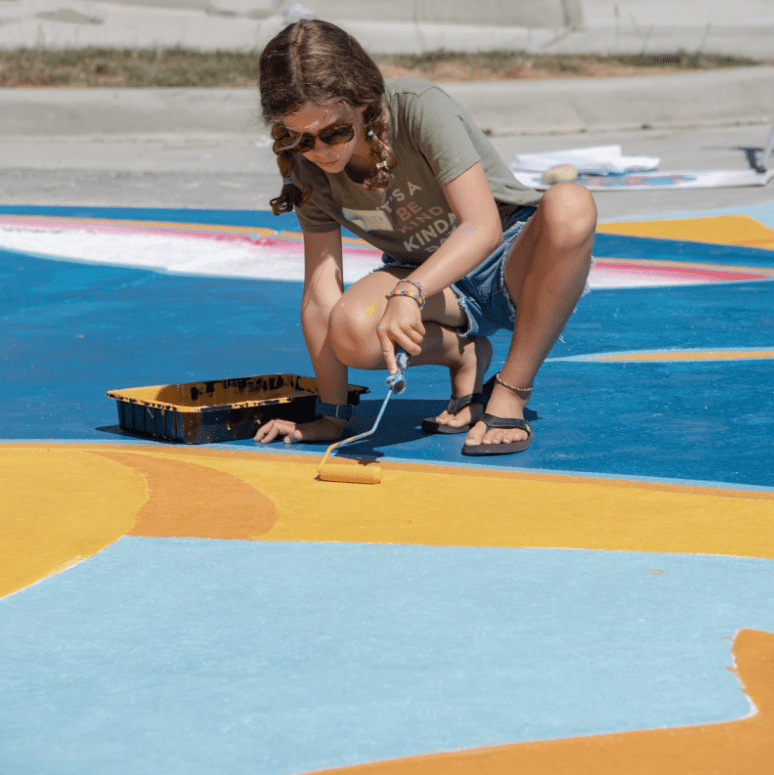
Painting Lynn and North Street Mural
Resident helping paint the Lynn and North Street Mural. Photo by Robbie Hochreiter

Steps to Get Your Street Mural Approved

Once you decide on a suitable location and conceptual design, we need to review and approve your plans before proceeding with the mural. The approval process involves several stages and includes reviews by various City departments, advisory boards, and commissions.

To begin, submit the following materials via email to arts@cob.org. Please include the project representative’s name and phone number. The Planning and Community Development Department (PCDD) and the Public Works Department will review your proposal. Once we receive the initial required materials, a PCDD representative will reach out to help guide you through the rest of the process.

Required materials: 

  • Conceptual Design – A preliminary drawing or images conveying the general look, colors, and proposed location of the mural. This can include inspirational artwork, rough sketches, or other visual ideas. 
  • Map of the proposed location – A map or simple drawing showing the roadway area you intend to paint. This should include: 
    • Street names 
    • North arrow 
    • Dimensions. Include the length and width of the roadway and the extent of the proposed painting area, including the distance from the curbs. 
  • Project background information – 
    • Who is involved in the project? 
    • How will the project be funded? 
    • Proposed project timeline

Before you fully begin the mural design process, the Bellingham Arts Commission (BAC) needs to review your proposed artwork concept. 

We will invite the project representative to attend a monthly Arts Commission meeting to share more information about the project and answer any questions the Commissioners may have. The BAC will offer feedback on the concept’s suitability for the location and provide design considerations. 

The BAC meets on the first Tuesday of every month at 5 pm at City Hall and online via Zoom. 

Once the BAC has approved your concept, you can begin working on the final design for the mural. You will then present the final design to the Bellingham Arts Commission.

Your final submission should include:

  • Final designs, including specific colors and a detailed site plan.
  • Any additional information requested by the BAC at the preliminary review.

Upon the BAC’s approval of the final design, staff will send a formal recommendation to the Mayor. You typically will receive a notice of the Mayor’s decision within 15 days. If the Mayor does not approve the design, additional approval steps may be required.

Once the Mayor approves your design, you will need to submit the following:

  • Temporary Right-of-way (ROW) use permit application
    • After the BAC approves your concept, you can begin the permit application process. Once the Mayor approves the final design, you can finalize the permits.
  • Traffic control plan
  • Neighborhood authorization
    • You will need approval and full support from the property owners immediately abutting the project area. You will also need to notify all residents along the project street frontage.
    • City Staff will provide you with a sample neighborhood notification once your concept is approved.

Once COB officials approve the permits, the project representative will sign a Memorandum of Agreement (MOA). This document outlines the installation requirements, the approved design, and expectations for maintenance or potential removal. Once all parties sign the MOA, you can install the mural.

More information