Page last updated on:
Mayor Kim Lund’s 2024 “Expanding Housing Options in Bellingham” set in motion a government-wide initiative. The ambitious plan focuses on increasing housing supply through updated policies, citywide collaboration, and streamlined processes.
Learn what has been done to date and how these changes are taking shape in our community.
What’s been done so far
Parking reform
An interim ordinance removing parking minimum requirements went into effect January 2025. Instead of requiring developers to include a specific number of parking spaces, parking reforms allow them to decide on the number of spaces based on anticipated need. This reduces construction costs, which in turn makes it easier to get financing, and creates more room for housing.
Allowing developers and property owners to right-size the amount of parking they provide – instead of mandating it – can help spur more housing availability.
Middle housing
An interim ordinance allowing middle housing citywide went into effect in June 2025. Middle housing can help us meet our housing needs by allowing us to build denser – with more homes on the same amount of limited land – and build a larger variety of housing types, including more affordable housing.
Multi-family tax exemptions
Improvements to the City’s Multi-family Tax Exemption program went into effect June 2025. The program provides incentives in the form of tax exemptions to stimulate housing development and affordable housing production.
Streamlined internal processes
The Development Review Team is working more closely with applicants to help make their applications successful – and avoid long, clunky approval processes. They’ve paid special attention to helping residential projects that include low-income housing, infill development, and projects in key areas move through the process quickly. They’ve also made the development codes and regulations clearer for all developers.
These changes mean more housing can hit the market faster, and project costs are lower, which can result in lower costs down the line. A smoother process also incentivizes developers to take on projects in Bellingham.
Housing change in action
Explore some of the projects in neighborhoods across the City that demonstrate the impact of the Executive Order.
Overview
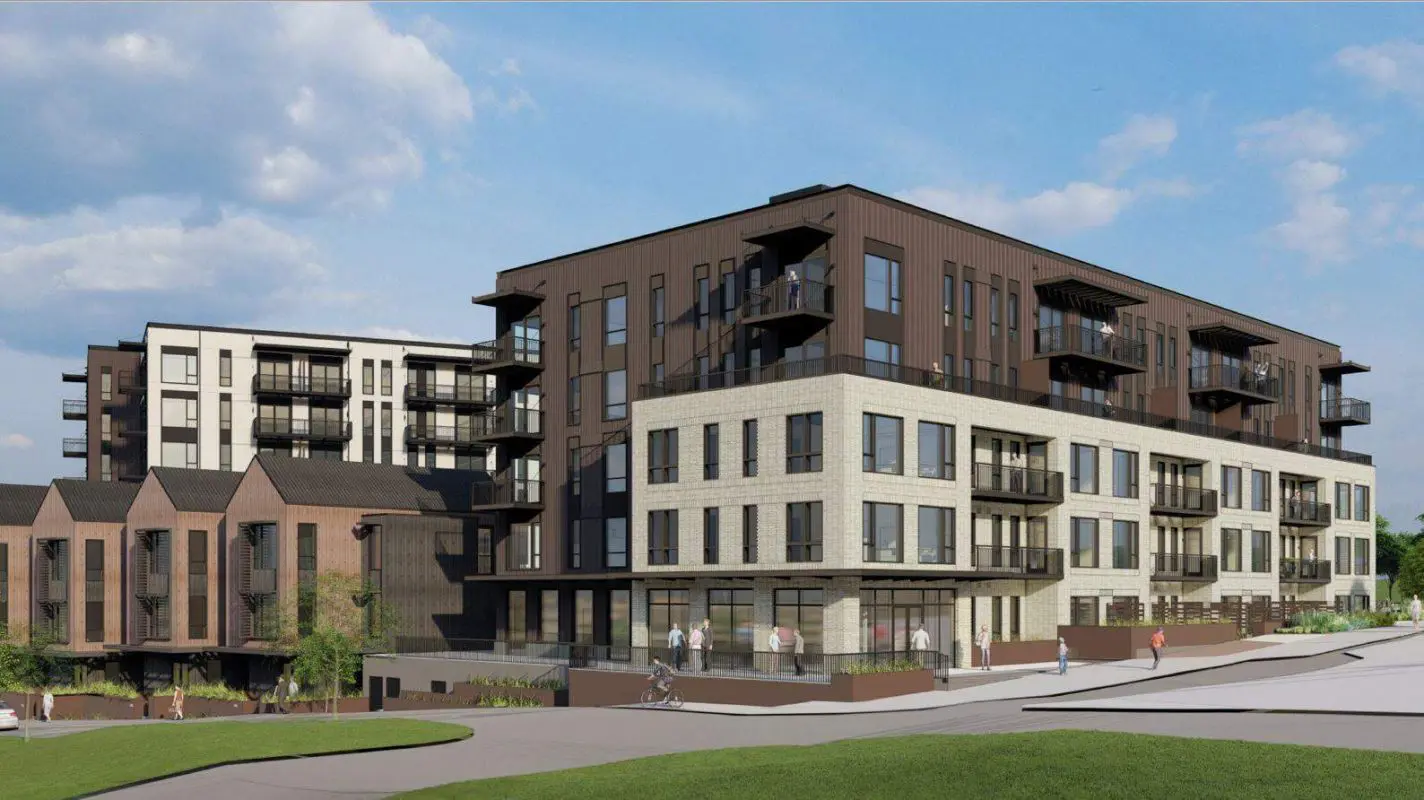
The Manning project includes 142 apartment units, five large for-sale townhomes, street-level retail, and a structured underground parking facility — bringing a true mixed-use urban form to the heart of the district.
The project aligns with the neighborhood’s recently adopted Urban Village plan, which will add significantly more housing, increased bike and pedestrian connections, traffic improvements, and more public spaces. It also preserves about 40 acres of wetlands and forested habitat.
How the Executive Order supported this project
- Multi-Family Tax Exemption Program: The Manning project initially stalled because of costs, but the Multi-Family Tax Exemption Program was a key motivator for developers to pick the project back up. The program provides the developer with a tax exemption for 8 years in exchange for building multi-family homes, making projects like this one more financially feasible.
- Parking reform: Instead of requiring developers to include a specific number of parking spaces, parking reforms allow them to decide on the number of spaces based on anticipated need. This reduces construction costs, which in turn makes it easier to get financing, and creates more room for housing.
- Streamlined permitting: The development applications were able to move through the permitting and approvals process more quickly with added support from the City Development Review Team.
Overview
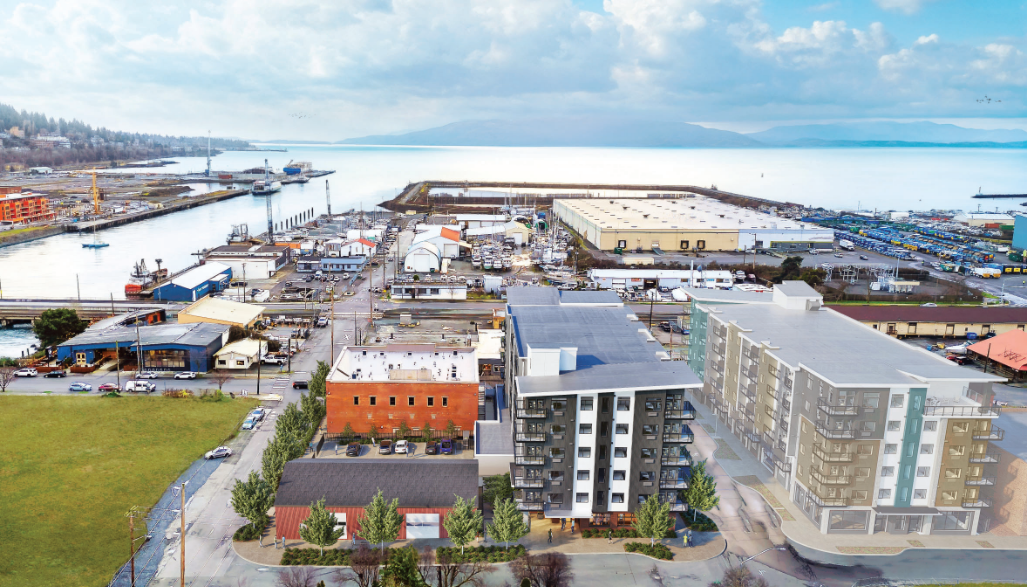
Construction kicked off in March 2025 on a project that will bring about 800 new residential units and more commercial space to the Old Town District. The private developments will be constructed over eight city blocks over the next 10 years. While the project was in motion before the recent Executive Order, it shows how actions called for in the Executive Order spur housing development. Learn more in our press release about the project.
How the Executive Order supports projects like this
- Parking reform: Eliminating parking requirements allowed the developer to more than double the number of housing units that could be built for one of the projects. Developers decided on the number of spaces for each project based on anticipated need in an area that’s very walkable and bikeable.
- Multi-Family Tax Exemption Program: The program provides developers with a tax exemption for 8-12 years in exchange for building multi-family homes, making projects like this one more financially feasible.
- Streamlined permitting: Policies set in place by the Executive Order allowed this project to be prioritized by the Development Review Team, which helped it move along more quickly.

Overview
LaFreniere Court is a new Kulshan Community Land Trust project that will create 18 permanently affordable, energy-efficient, solar-ready homes on a previously vacant site. The homes will be available to households earning at or below 80% of the Area Median Income. This project began before the Housing Executive Order, and showcases the types of projects that will be easier to build under new policies.
How the Executive Order supports projects like this
- Middle housing support: Because of the level of density, the project was subject to a lengthy approval process. Thanks to new policies, similar projects can now move forward more quickly and efficiently.
- Parking reform: This project exemplifies how more housing can be placed on a site when fewer parking spaces are required — allowing for the prioritization of housing over cars.
- Streamlined permitting: Policies set in place by the Executive Order allow affordable housing projects like this one to be prioritized by our Development Review Team. This allows them to move forward more quickly.
Overview
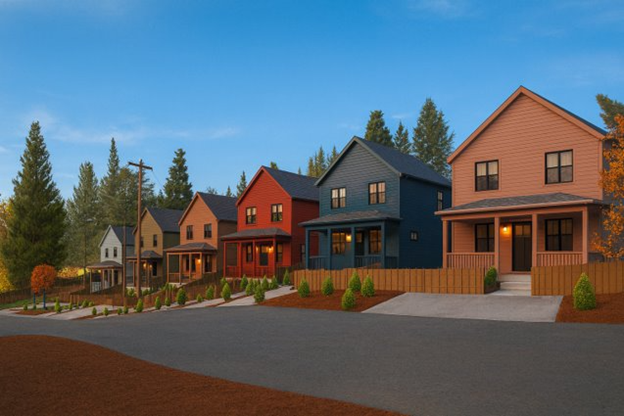
This proposed project in the Puget Neighborhood includes three detached single-family residences. Each single-family residence also has two ADUs, for a total of nine new dwelling units. The lots are located near shopping, bus lines, and services.
How the Executive Order supports this project
- Middle housing support: The site is currently slated to offer housing for nine families. Under previous rules, only three would have been allowed.
- Parking reform: Eliminating a prior requirement to provide four parking spots on each lot allowed more flexibility and room to place the buildings, which allowed for preservation of trees.
- Streamlined permitting: Policies set in place by the Executive Order allow middle housing projects like this one to be prioritized by our Development Review Team. This allows them to move along more quickly.
- Collaboration with applicants: The developer and City staff considered several site plans to find a way to preserve landmark trees while still achieving infill density.
