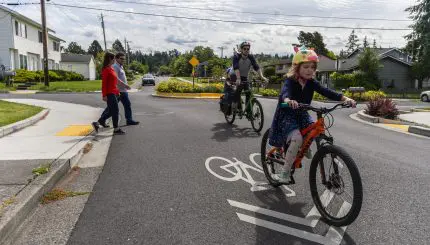
Through the Community Streets Program, we work with you to identify and find solutions for traffic issues on your residential streets. We want to make the streets in our neighborhoods safer and more comfortable for everyone.
Types of concerns Community Streets can address
Residents are often the first to know about traffic problems on their streets. With your help, we can address concerns related to:
- Speeding
- Visibility and sight distance
- Traffic volume and congestion
- Parking and access
- Infrastructure and road conditions
Non-emergency maintenance requests for topics such as missing or damaged traffic signs, traffic signal issues, potholes, or litter or debris on a roadway can be reported to us anytime using SeeClickFix.
Where we address concerns
We’ve divided Bellingham into four sections, which we refer to as Groups A, B, C, and D. Each year, we shine a spotlight on one of these sections, focusing on approximately a quarter of our community. This rotating approach means that every four years, each group gets its turn to receive the program’s attention, ensuring a fair and balanced distribution of resources across our city. Below is a look at our planned timeline for the next four years:

- 2026: Group B – Birchwood, Columbia, Cornwall Park, Lettered Streets, Sunnyland, City Center, York
- 2027: Group C – Roosevelt, Alabama Hill, Puget, Whatcom Falls, Samish
- 2028: Group D – Sehome, WWU, South Hill, Happy Valley, Fairhaven, Edgemoor, South
- 2029: Group A – Cordata, Meridian, King Mountain, Irongate, Barkley, Silver Beach
More information
The Community Streets Program addresses traffic concerns on non-arterial, residential streets. Residential streets provide direct access to homes within your neighborhood, are intended to be calm and quiet, and are not designed to move vehicles from one part of the city to another.
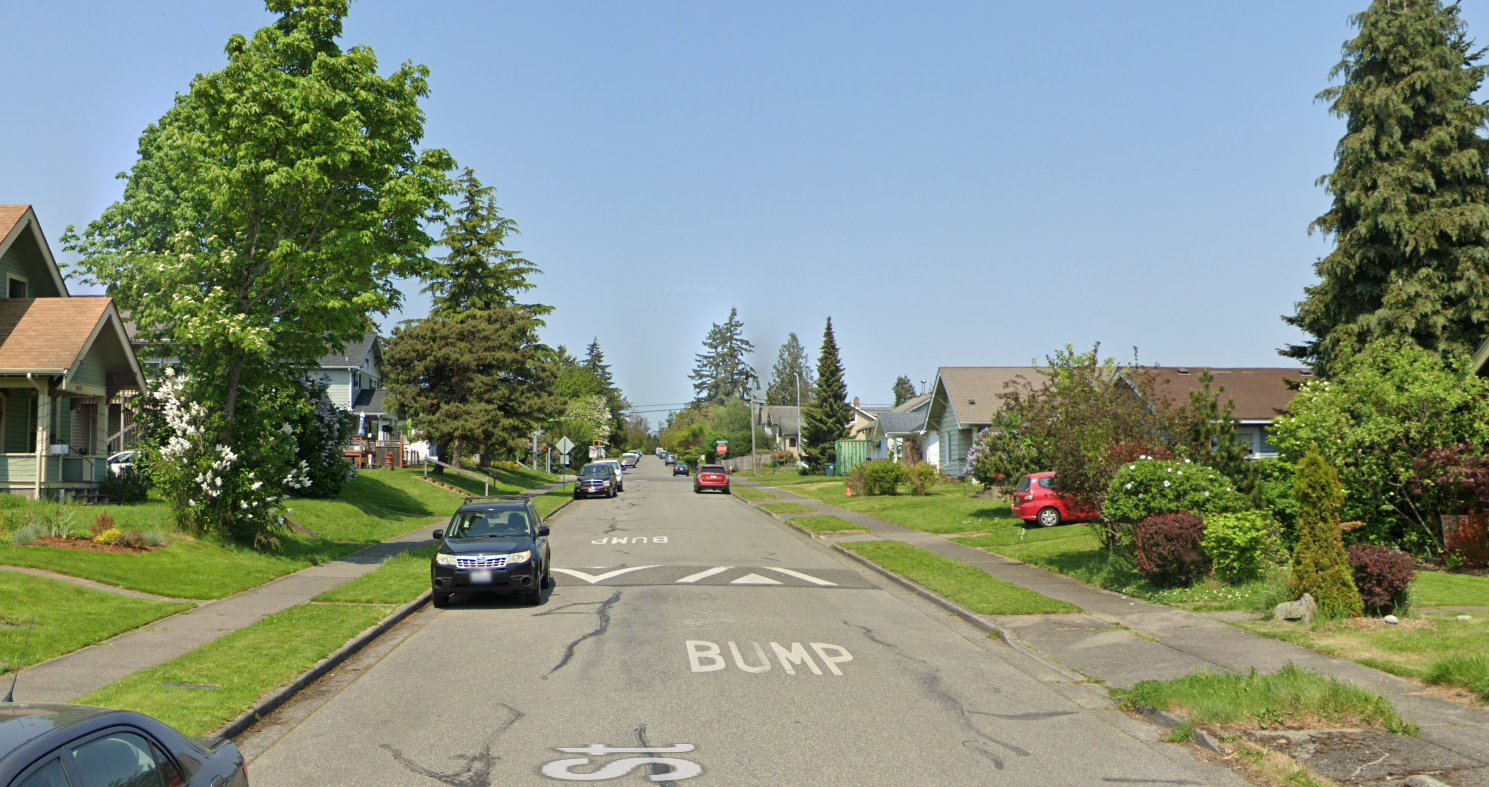
This program is unable to address concerns on non-residential streets. Non-residential roads, such as arterial and collector routes, are major thoroughfares designed to move traffic between different areas of the city. While promoting safety is always our top priority, collector and arterial roads are intended to facilitate the smooth and rapid flow of vehicles, often with higher speed limits and multiple lanes.
Improvements on these types of streets typically require extensive planning and major capital projects, which are guided by our Six-Year Transportation Improvement Program and Local Road Safety Plan. Examples of arterial streets in Bellingham include Lakeway Drive, Iowa Street, State Street, Cordata Parkway, etc.

Have a concern about an arterial or collector street? You can still let us know. Your feedback helps us identify issues and prioritize funding for capital projects. Many of these streets have planned improvements as part of our Bicycle and Pedestrian Master Plans. These improvements are implemented in order of priority and are contingent upon the availability of funding. If you have a request for a bicycle or pedestrian improvement, please let us know by completing this online form.
After completing our initial review, we add relevant concerns to the interactive map. Our team carefully evaluates each submission and assigns next steps, which we then update on the map. Learn more about how the program works.
You can still let us know! However, we won’t be able to conduct an in-depth investigation into this area immediately. If you have non-emergency concerns about roadway conditions, you can use SeeClickFix to report them. If you have a request for a bicycle or pedestrian improvement, you can let us know through this online form.
The Community Streets Program has three primary goals:
- Empower residents: We encourage residents to tell us about traffic safety concerns they have in their neighborhood or on residential streets in neighborhoods where they frequently visit.
- Collaborative solutions: We partner with residents and community groups to find solutions for each concern. This could look like creating safer crossings for pedestrians or slowing down traffic.
- Equitable engagement: We aim to create traffic safety solutions that work for the entire community. We’re prioritizing input from all residents, and by addressing one area of the city at a time, we can actively seek out and incorporate diverse feedback.