The City of Bellingham takes a proactive, community-driven approach to improving transportation safety. We strive to balance the safety and mobility needs of all users, with an emphasis on protecting the most vulnerable travelers, primarily people walking and biking.
Our work begins with robust public engagement: residents help shape our vision and city priorities through the development of our Pedestrian and Bicycle Master Plans, which guide city investments over the long term. By actively soliciting input from neighborhoods, schools, advocacy groups, and everyday users, we ensure that prioritized projects reflect community needs and values. Our Local Road Safety Plan and Transportation Report on Annual Mobility provide additional guidance on prioritized projects and help track progress as improvements are completed.
How we prioritize safety improvements
When prioritizing improvements, we focus on maximizing safety benefits with limited resources. Projects are evaluated based on:
- Demonstrated safety risks
- Existing and potential usage
- Ability to connect residents to schools, parks, transit, and more
This data‑driven process ensures that investments deliver the greatest benefit to the most people, while addressing areas of highest need. Through this coordinated approach—grounded in community input, guided by safety and connectivity priorities- the City of Bellingham is steadily building a safer, more accessible, and better connected network for all users.
How the City is working to improve safety on our streets
The City of Bellingham is taking the next step to advance transportation safety efforts by launching a three‑year, citywide effort to update speed limits based on the City’s new Speed Limit Setting Policy.
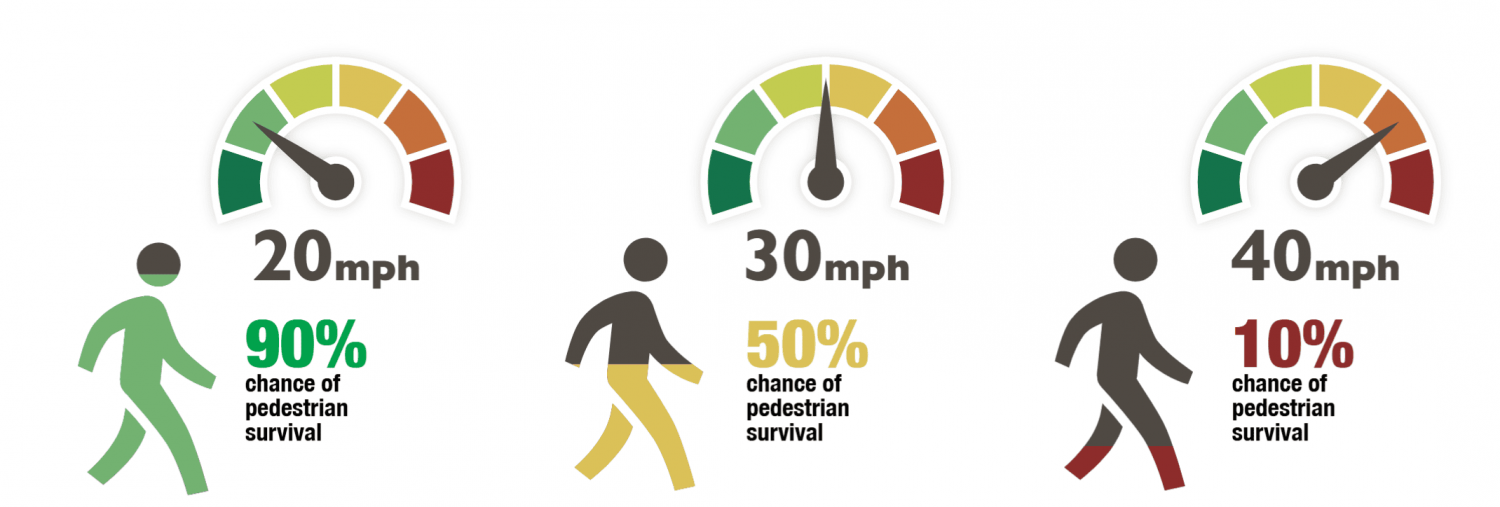
These changes are all about improving safety. Slower speeds mean fewer serious injuries and fatalities. Research consistently shows that even small reductions in speed can make a meaningful difference, especially for people walking or biking.
By slowing down in neighborhoods and other places where people walk, bike, and gather, we can help ensure everyone gets home safely.
In May 2026, City Council approved an ordinance that:
- Sets a 20 mph default speed limit on all city streets without posted signs. This change affects non-arterial residential streets where speed limits aren’t posted directly. While most people only drive a short distance on residential streets each day, there are more miles of residential streets in Bellingham than any other classification.
- Establishes a 20 mph speed limit in the downtown business district. Public Works will install new signs downtown and at city entrances in summer 2026.
- Lowers speed limits by 5-10 mph on select arterial streets. Changes to these streets will take effect when signs are updated, beginning in 2027. We’ll share more information about those plans as they get closer.
The new 20-mph default speed limit on residential streets and downtown will go into effect in summer 2026, when Public Works crews install new speed limit signs at entrances to the city and downtown.
Unsure which roads are classified as residential or arterial? Check our Arterial Routes and Traffic Signals map for details on all of the arterial roadways within city limits.
Local and Regional Coordination
While updating a speed limit sign is straightforward, ensuring enforcement, transit operations, and public communication all support that change requires close coordination across agencies. To meet that challenge and ensure that changes truly improve safety, the City began working with local and regional agencies to launch the Bellingham Traffic Safety Coalition (BTSC) in 2025.
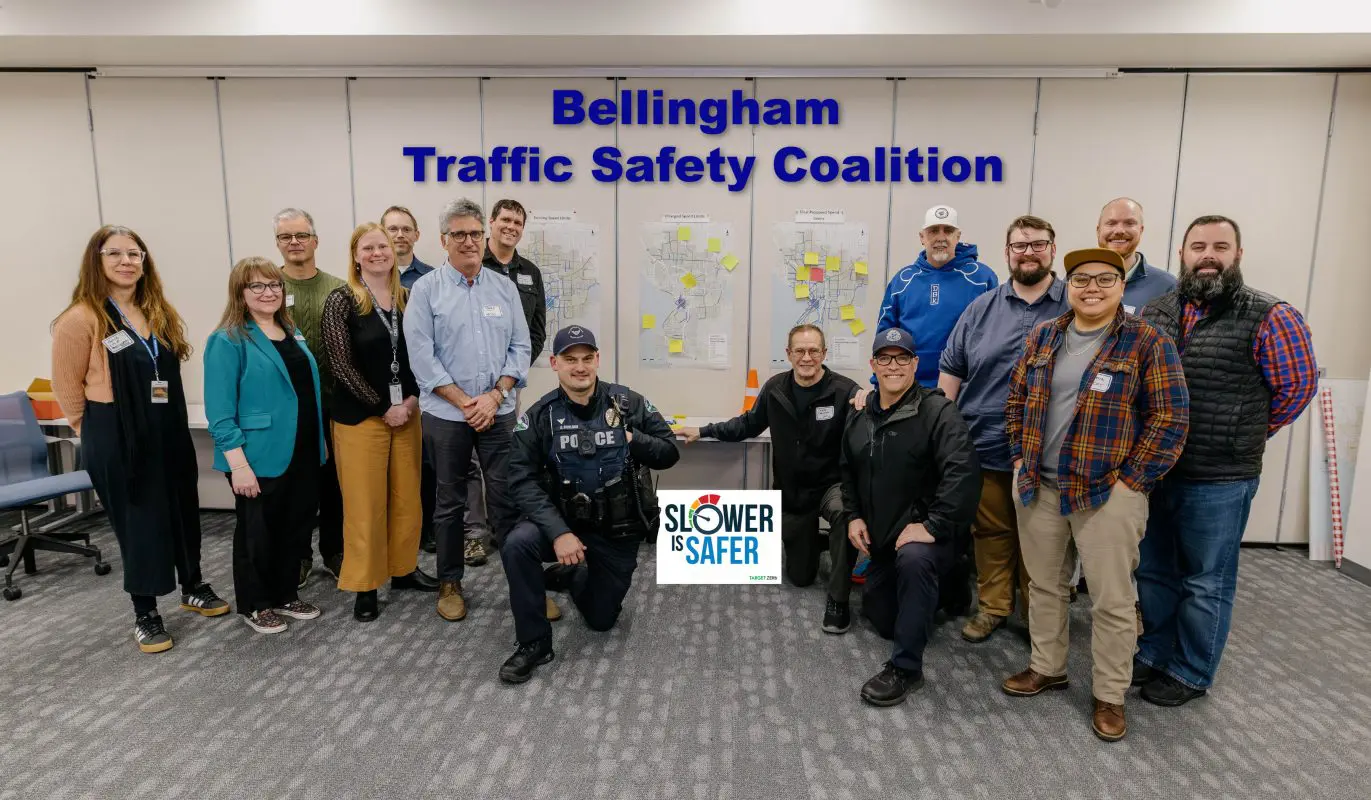
This informal group is comprised of regional partners, the Washington State Department of Transportation (WSDOT), and the WA Traffic Safety Commission (WTSC). The BTSC is bringing agencies together to coordinate and guide joint efforts to advance traffic safety projects, beginning with updates to city speed limits and laying the groundwork for Bellingham’s first Vision Zero plan.
Vision Zero Plan Development
With speed limit updates underway, the City is beginning development of our first Vision Zero Plan and new traffic‑calming policies aimed at reducing fatal and serious‑injury collisions. This long‑term effort builds on the momentum created through BTSC collaboration over the past year. Once complete, Bellingham’s Vision Zero Plan will shape how we design, operate, and support city streets to prioritize safety for everyone.
Explore the Transportation Safety Projects section below to learn more about our ongoing progress to calm traffic and improve safety:
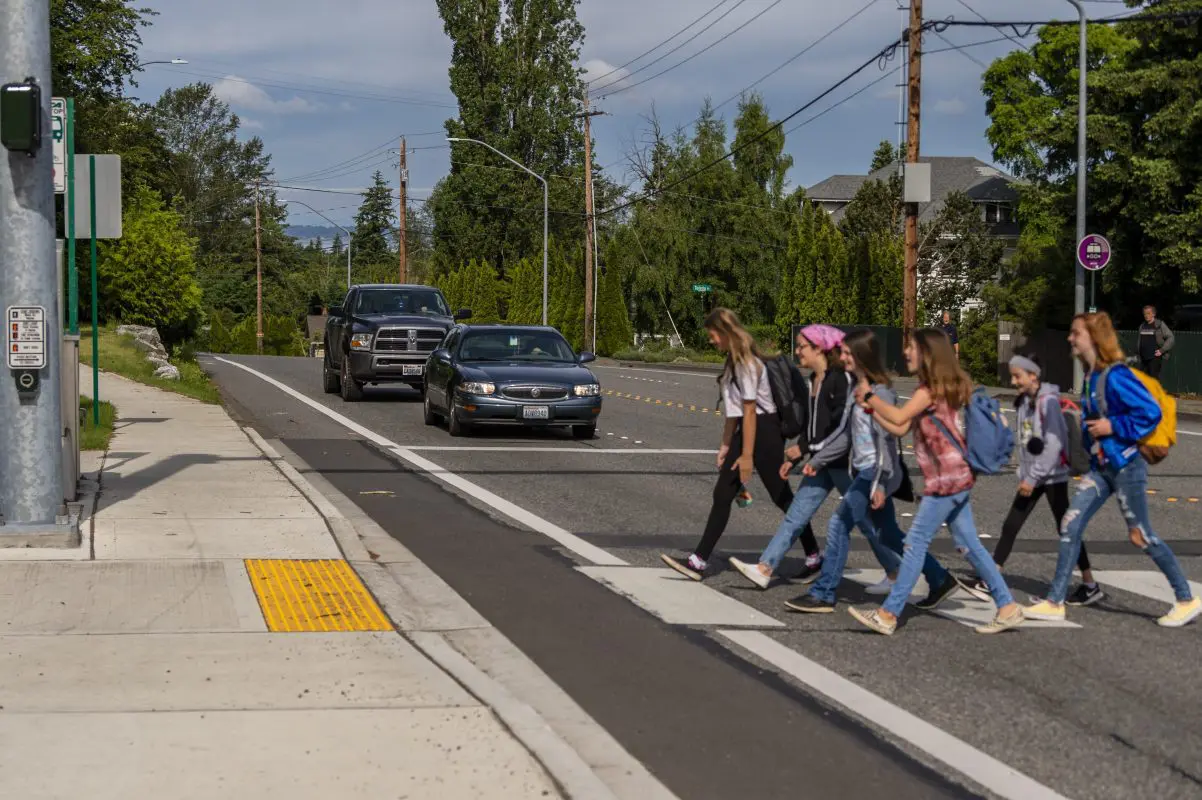
The SRTS program is helping to improve children’s safety and mobility by enabling and encouraging them to walk or bike to school
- Eligible projects are within 2 miles of K12 schools.
- Activities include sidewalk improvements, crosswalk upgrades, and safety education.
- Local info: Bellingham Public Schools Travel Safety
- Statewide info: Safe Kids Washington
Current & Upcoming SRTS Projects in Bellingham
- 2025–2027: Potter Street Roundabout & Pedestrian Improvements
- Upcoming Proposal: Birchwood Elementary SRTS Project
- Recently Completed: Parkview Elementary SRTS Project
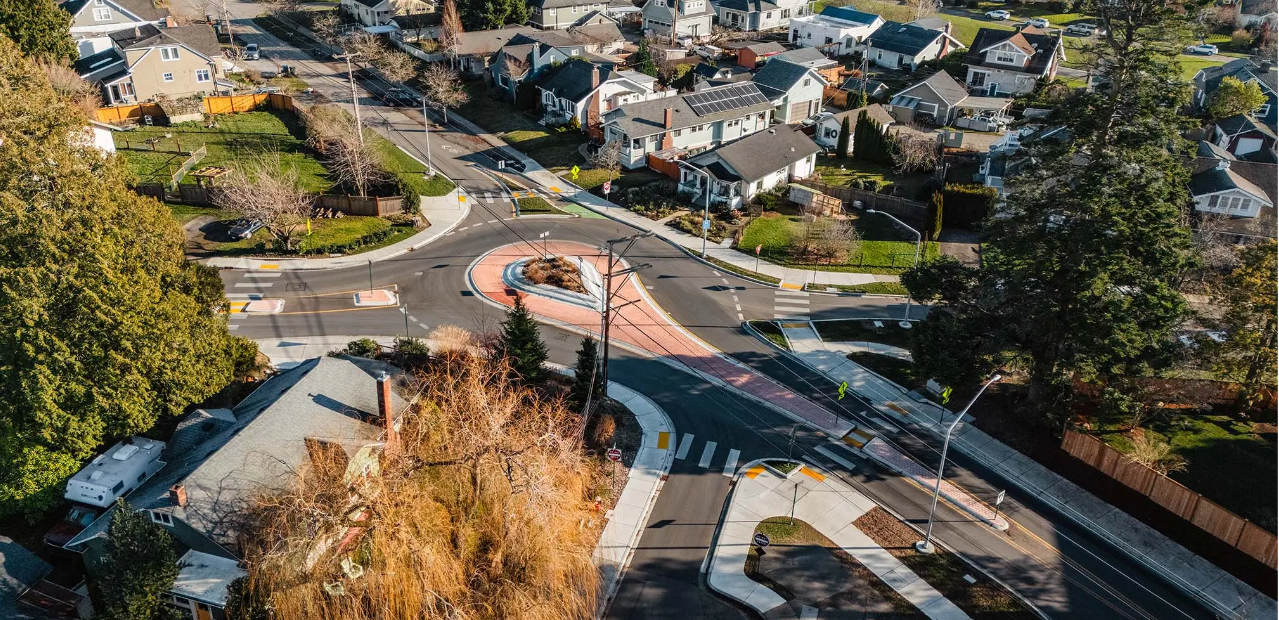
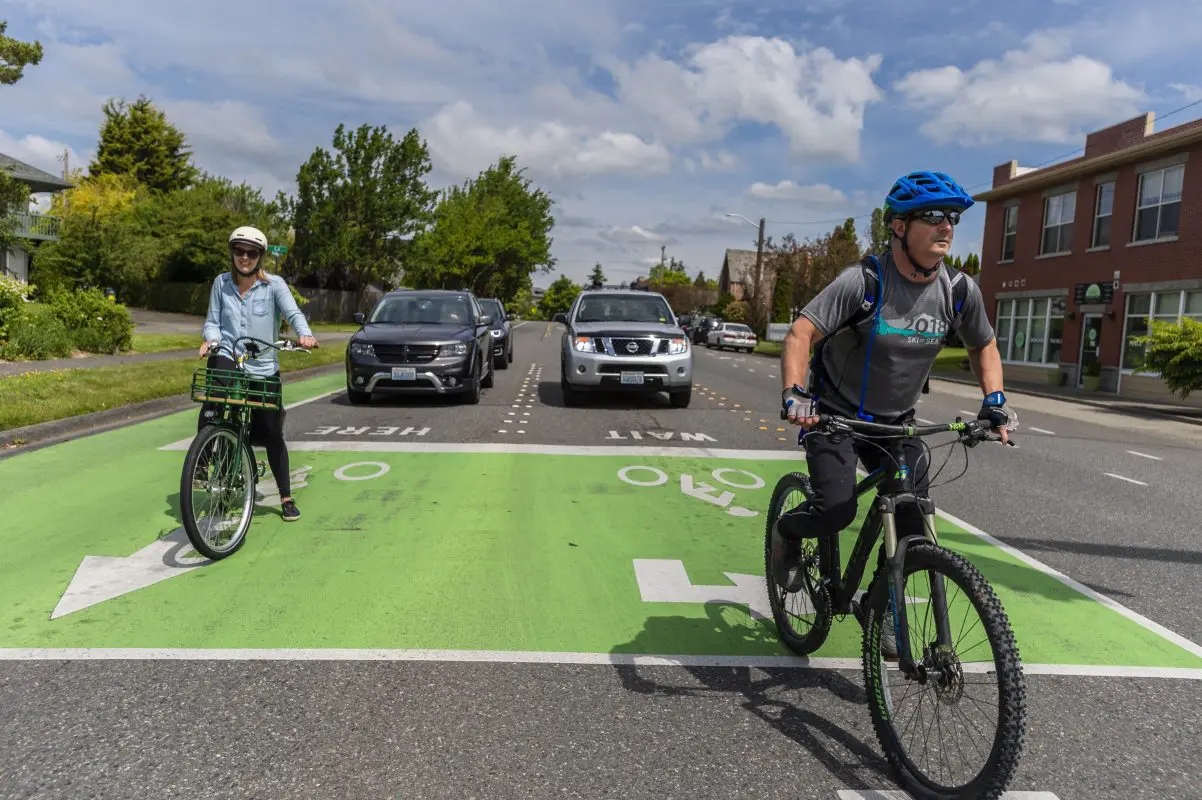
The Nonmotorized Transportation Improvements Program helps improve connections to transit and complete the citywide pedestrian and bicycle network
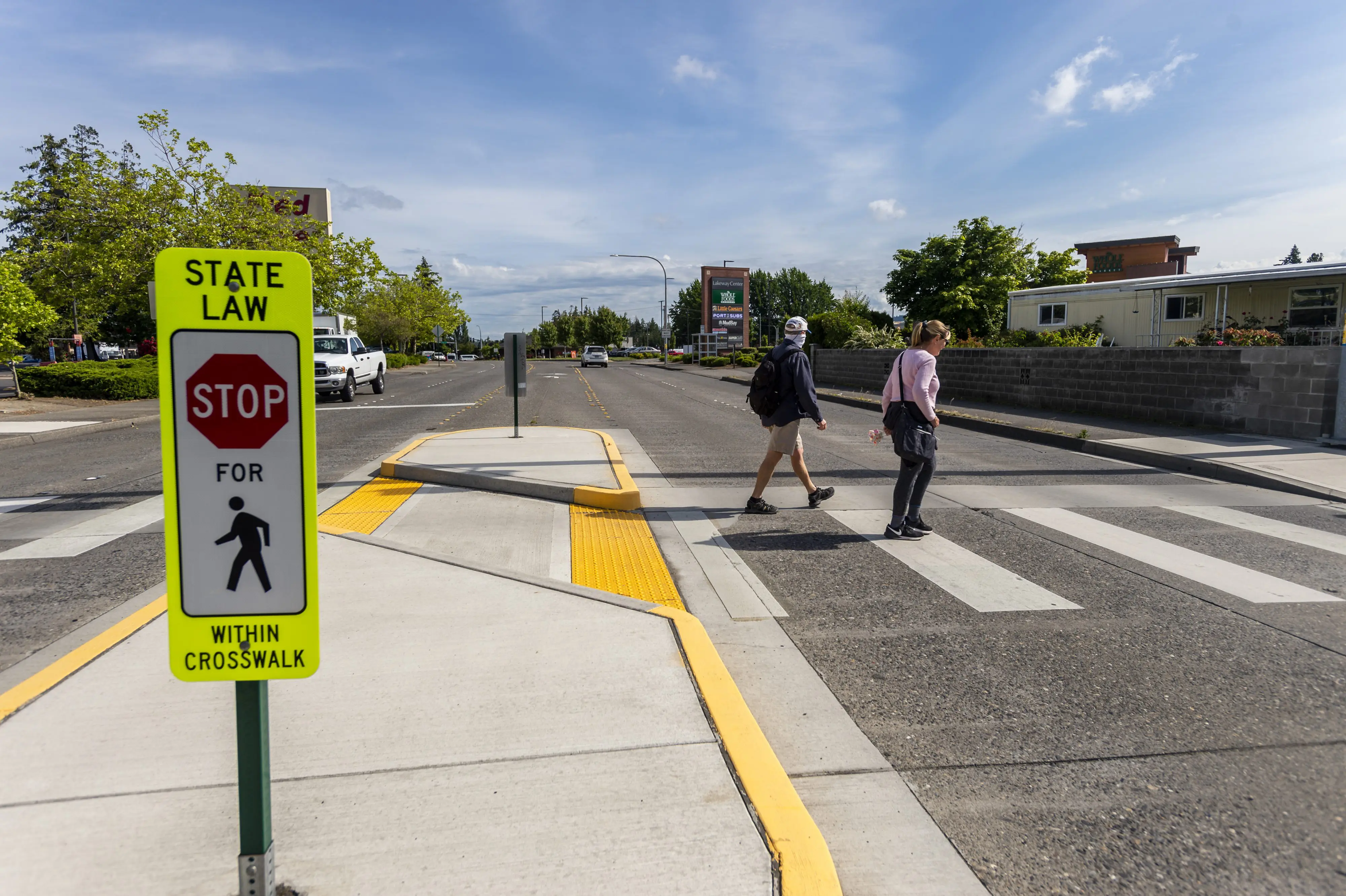
This program constructs safe, accessible, and equitable street‑crossing and connection projects for people walking, biking, and rolling. Our pedestrian and bicycle projects are guided by the City’s 2024 Pedestrian and Bicycle Master Plans, which are based on extensive engagement with neighborhoods, schools, advocacy groups, and everyday users. When we evaluate locations for upgrades, we consider demonstrated safety risks, existing and potential use, and how well an improvement would connect people to key destinations like parks, schools, and transit.
To stretch local Transportation Funds further, the City actively pursues competitive state and federal grants, leveraging local commitments to secure additional resources. This blended funding strategy allows us to expand infrastructure more quickly and cost‑effectively than local revenues alone would allow.
Current & Upcoming Nonmotorized Projects in Bellingham
- Recently Completed:
- Under Construction:
- Upcoming Projects:
- 2026 Citywide Non-Motorized Projects
- Holly Street Multimodal Improvements from Broadway to Champion
- Downtown Signalized Intersection Accessibility & Safety Improvements
- Meridian Birchwood Multimodal Transportation Improvements Project
- Meador Avenue and James Street Multimodal Improvements
- Harris Avenue Multimodal Corridor Improvements 12th to 24th Streets
- James Street Multimodal Improvements between Iowa Street and Sunset Drive
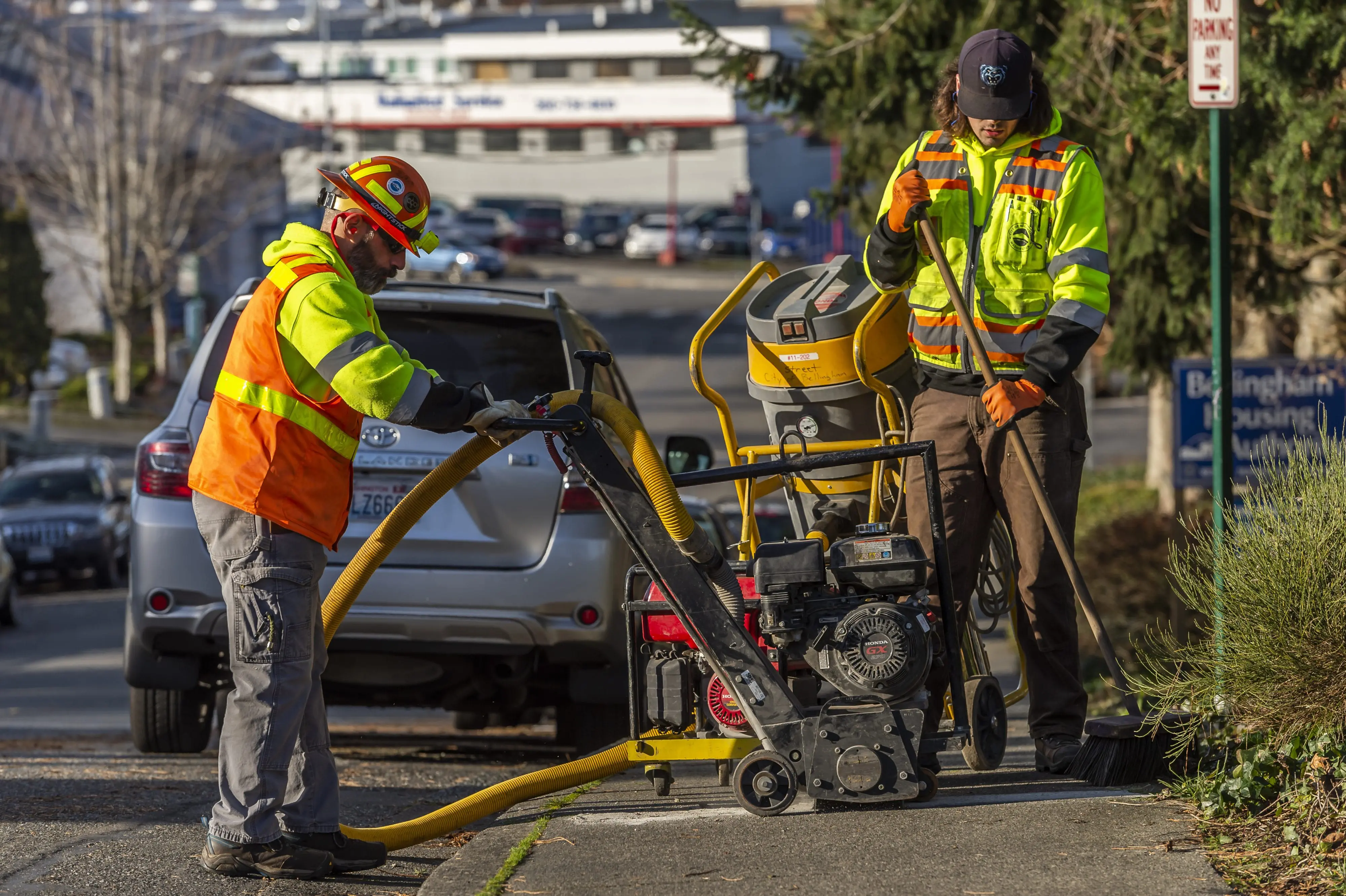
The Street Preservation & Maintenance program keeps Bellingham’s roads, alleys, and bridges in good condition
Public Works Crews evaluate pavement needs through routine inspections, targeted repairs, and scheduled upgrades. We also trim vegetation to ensure sidewalks and streets remain safe and accessible for all users.
Have a maintenance request? You can report non-emergency problems through SeeClickFix, which sends your request directly to the appropriate team and helps us prioritize repairs efficiently.
Whenever we repave streets or perform major maintenance, we coordinate to complete water or sewer utility replacements, improve street lighting, and integrate improvements recommended in our bike and pedestrian master plans. We are always looking for opportunities to ensure that paving and overlay projects maximize safety benefits. You can learn more about this program on our Street Maintenance webpage.
Current and Upcoming Pavement Maintenance Projects
- Recently Completed
- Upcoming Projects:
- Samish Way and Maple Street Overlay and Lighting Improvements
- East Bellingham Overlay
- Cordata State and Garden Overlay
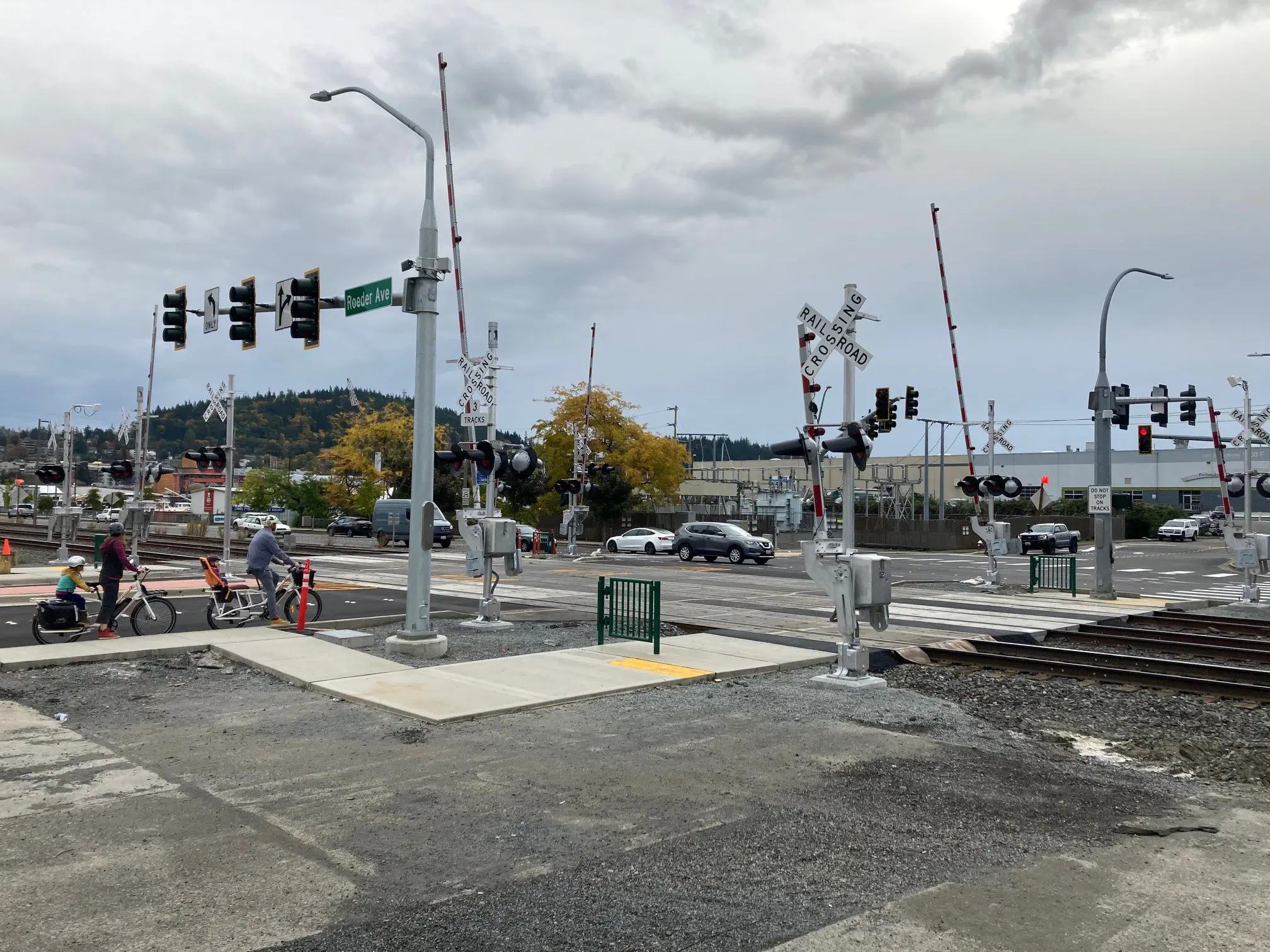
The Railroad Quiet Zones Program is working to improve safety and reduce noise at crossings
The local railway company in Bellingham, BNSF, is required by federal regulations to sound train horns at all intersections where roads and railroad tracks cross on the same level (called “at-grade crossings”), regardless of the time of day.
Bellingham is split into two quiet zones, designated as the Waterfront Quiet Zone and the Fairhaven Quiet Zone. To establish a quiet zone, all crossings within the area must be upgraded with safety enhancements and approved by the Federal Railroad Administration. You can learn more about this program and the status of each Quiet Zone by visiting our Railroad Crossing Safety and Quiet Zones for Trains page.
Current and Upcoming Quiet Zone Projects
- Recently Completed:
- Bayview Road at Boulevard Park crossing
- Boulevard Park pedestrian crossing
- C Street crossing
- Laurel Street crossing
- F Street crossing
- Upcoming Projects:
In 2025, the City launched Community Streets to work more collaboratively with residents to help address traffic safety concerns on residential streets. These are narrower roads designed to provide direct access to homes, and are not intended to facilitate the flow of traffic from one part of the city to another. To ensure a fair and balanced distribution of limited resources, we’ve divided Bellingham into four sections, with a rotating spotlight focused on one section each year.
Visit our Community Streets Program webpage to learn more about the program and when your neighborhood will be spotlighted.
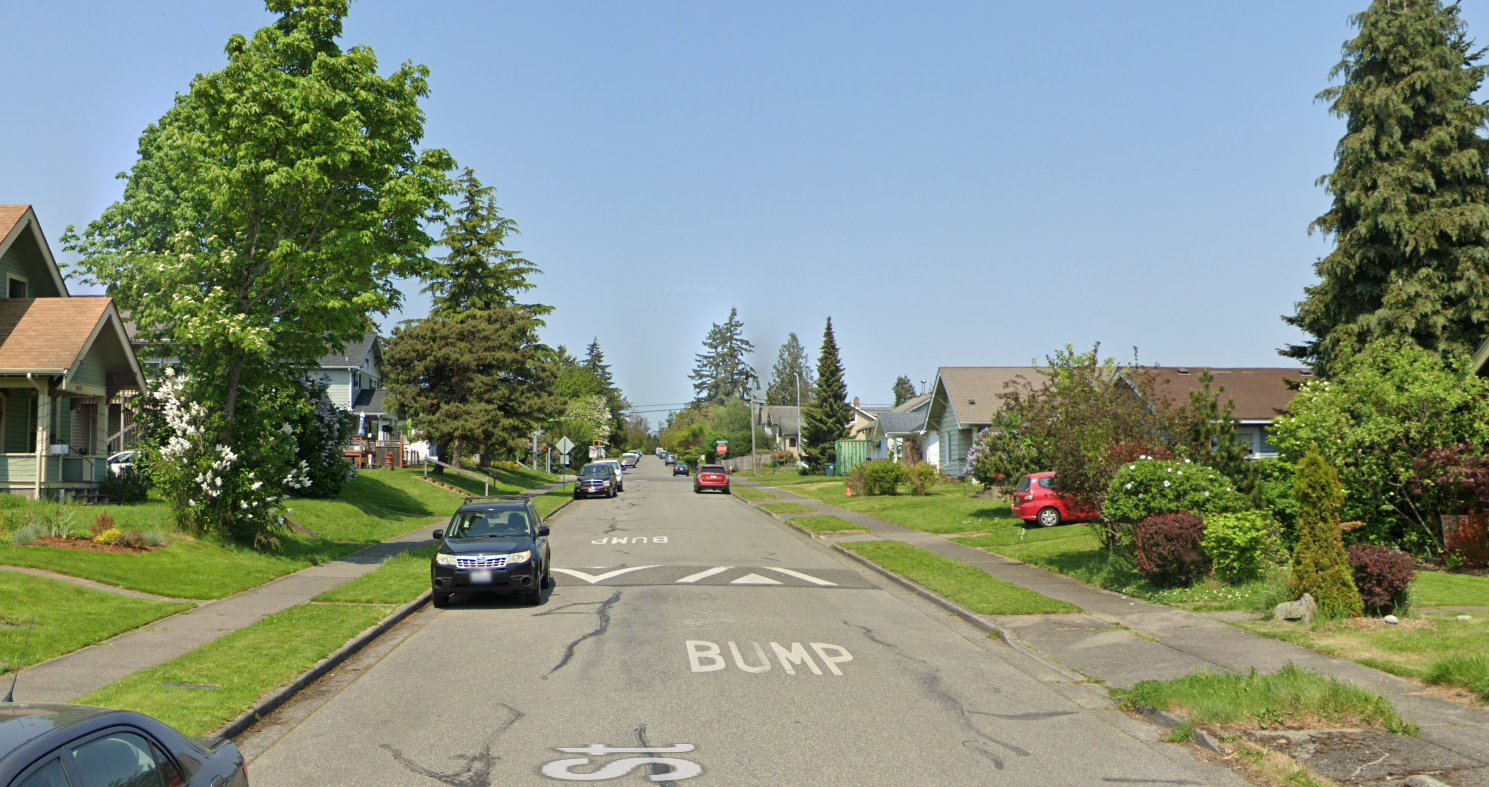
We created Neighborhood Projects as a way for neighbors to take the lead on creative, self-driven activities, with the City as a guide and supportive partner. On these projects, residents can collaborate to foster community and improve safety through creative, low-cost initiatives. These projects create opportunities for neighborhoods to address unique community concerns in their backyard through hands-on alternative solutions. Neighbors are responsible for coordinating with and getting approval from the City on project concepts.
Resources available for Neighborhood Projects:

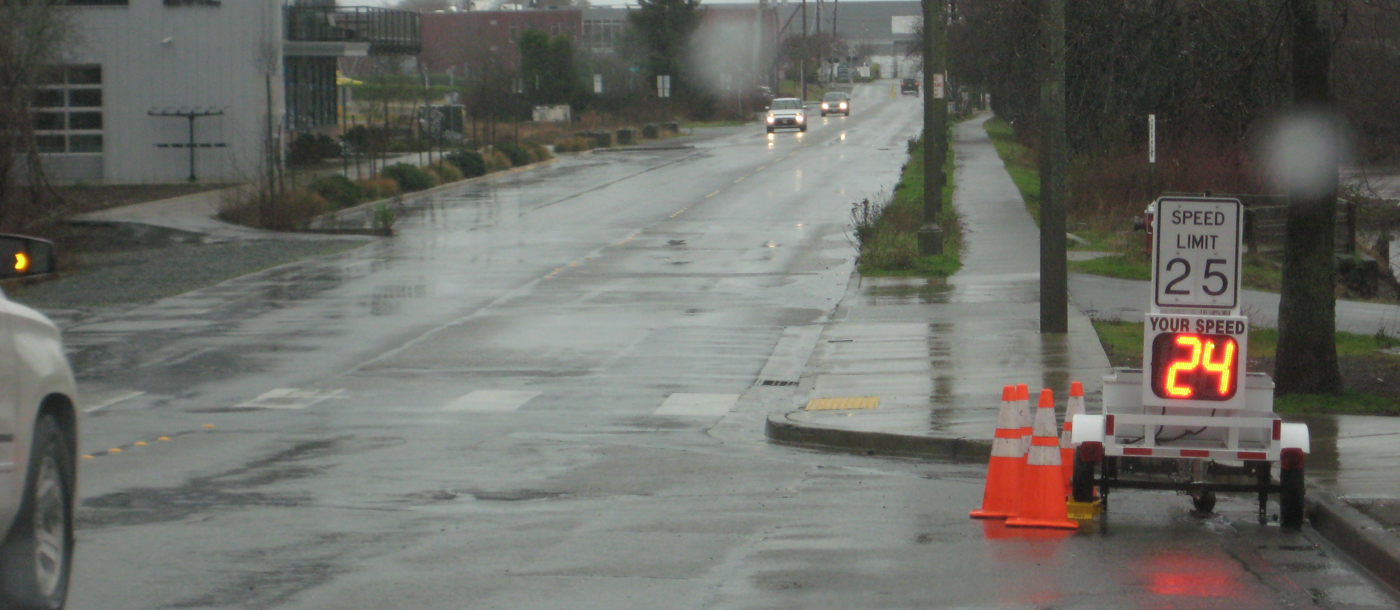
One effective tool for temporarily slowing down traffic is a mobile speed trailer. You can learn more and submit a request on our Mobile Speed Trailer page.